I have never been a big fan of fighting what has come to be called the “culture wars” in America. I find moral politics and legislative haggling to be tiresome and messy. But even more, these cultural conflicts can become for the church a terrible distraction and barrier to keeping Jesus Christ and His gospel our central concern. Recently, however, with the rapid rise of power politics and the overt legal threats brought against the free exercise of religion, I have been rethinking the role of political and legislative power.
The tension here is that many Christians see the use of political and legal power as a misunderstanding, misuse, and distortion of divine power and priorities. To some extent, that is certainly true. But in another very real sense, when enforced policies and political power moves become matters of causing harm, then at what point is the Christian obligated to use means of power—political power included—to protect the innocent and promote the common good?
There’s no doubt that at some important level, Christians have a responsibility to protect human life. Proverbs 24:11 says, “Rescue those who are being taken away to death; hold back those who are stumbling to the slaughter.” And as Genesis 1:26 makes clear, as gendered divine image bearers, we are also responsible to lovingly steward and rule over God’s creation in ways that honor Him.
In my mind, many of the recent moves to demand greater access to and funding for abortion alongside the full affirmation of the LGBT+ agenda as well as the active promotion of medical interventions to “transition” youth who are struggling with gender dysphoria are good examples of areas where real and lasting harm is being done to the people directly involved in these decisions and lifestyles.
You can call it a “culture war,” or something else, but when real and active harm is being done to people, then beyond active avenues of persuasion, all legal and political means should be used to protect those who would otherwise be harmed, even if that might mean protecting some people from themselves. This is where libertarian freedom fails to recognize that in a world suffering the consequences of the fall, unbridled liberty is an open invitation to the harm of self and others.
In short, we are all sinners, and sometimes we need to be protected not only from others, but also from ourselves. And whether or not we admit it, there is a cultural and spiritual battle being waged. This battle is not merely a set of abstract arguments for a vision of what constitutes the common good. It is a concrete battle being waged in real time and real space. Right now, specific people are being harmed and becoming casualties in the process.
Christians who claim to love God and His justice should not turn a blind, indifferent, or fearful eye away from these real-life tragedies currently unfolding before us. We must wisely and appropriately use whatever power God has graciously given us to humbly, lovingly, and courageously fight for those who need to be protected from the devilish and destructive deceptions and deeds of our time. As G. K. Chesterton reminds us, “The true soldier fights not because he hates what is in front of him, but because he loves what is behind him.”
The term, “woke,” was originally intended to help people better understand the ways in which racism negatively contributes to social systems and human relationships. The “woke” person had awakened from their moral slumber and was willing to admit wrong-doing and identify the ways in which their “white privilege” (meaning majority-culture status in the western context) had hindered the flourishing of minorities in positions of poverty, oppression, and weakness.
More recently, the term “woke” has taken on a decisively disdainful and pejorative connotation, referring to those who have been taken in by a “progressive” view of the world that sees almost everything through the lens of critical race theory, interpreting society through postmodern Marxist and racial categories.
A lot could be said about the original meaning of this term as well as the ways it has been changed into one of ridicule and derision. But regardless of whether you want to disparage or defend the term, something I have observed with those who consider themselves to be “woke” in the positive sense is that they tend to demand a level of sensitivity in public and interpersonal communication that borders on the absurd.
In short, for many, a passionate commitment to the principles of woke culture tends to destroy open communication. Every conversation, if not perfectly crafted, becomes a minefield of potential triggers for producing pain, anger, and even outrage. The problem is, very few conversations are perfectly crafted, and spontaneous conversations in particular are virtually never carefully constructed.
In the end, what was intended to create safe communication and better human relationships has created significant barriers to them instead. Genuine intimacy requires communication, and communication often results in misunderstanding and hurt feelings. But without communication and without a willingness to take the risk of being offended or offending someone else, friendships—at least in any meaningful form—become virtually impossible. Given enough time and enough talk, someone is bound to offend and be offended. Rather than joyous and sometime spirited exchange, communication becomes an endless string of trivial politically correct statements, polite critiques, and mutual virtue signaling.
Making “non-offense” the goal of relationships is essentially pushing communication to a level of nothing more than cliché, insignificance, and banality. If you don’t want to offend or be offended in friendships in particular and conversations in general, my advice is simple: stop talking and stop listening to others. It’s your safest bet. But it’s also the surest path to isolating dehumanization and closing yourself off from the people and things you were created for and need the most. You will be unable to love or be loved by anyone, God included, who, in His infinite holiness, has the potential to be the ultimate interpersonal offender.
As C. S. Lewis so wisely reminds us in The Four Loves, “To love at all is to be vulnerable. Love anything and your heart will be wrung and possibly broken. If you want to make sure of keeping it intact you must give it to no one, not even an animal. Wrap it carefully round with hobbies and little luxuries; avoid all entanglements. Lock it up safe in the casket or coffin of your selfishness. But in that casket, safe, dark, motionless, airless, it will change. It will not be broken; it will become unbreakable, impenetrable, irredeemable. To love is to be vulnerable.”
When applied to our relationship with God, if He is genuinely righteous and loving (He is), He will frequently say offensive things to the hearts and minds of sinners. And as sinners, we need to be offended if we are to escape the ever-present and destructive dangers of our sin and pride. Avoiding offense in a sin-stained world such as ours is to invite greater, not lesser, damage along the way.
We were created to be in relationship, to communicate and to listen to others as they communicate with us. But in the midst of that need, we take the risk not only of being hurt and offended, but also of hurting and offending others. It requires the hard work of granting and receiving forgiveness, but if we are willing to risk going deeper, sometimes offending and sometimes being offended along the way, then—and only then—can we enjoy the precious privilege of loving and being loved by God and one another. And that’s always a risk worth taking.
In this context of communication, God is simultaneously the ultimate offender and the ultimate consoler, the one who comes alongside us in our shame and our pain and calls us into personally challenging but infinitely loving and healing fellowship with Him. As Hosea 6:1 reminds us: “Come, let us return to the Lord. He has torn us to pieces, but he will heal us; he has injured us, but he will bind up our wounds.”
I recently turned sixty. A lot of water has passed beneath the bridge of my life with what feels like dizzying speed. How could I have lived six decades already? Where in the world has all the time gone?
As I reflect, I am struck first and foremost by a deep sense of gratitude. God has blessed me with so many precious people who have deeply impacted me: parents, family, friends, wife, children, and grandchildren. I have been given so much more than I deserved through the years: food, clothing, shelter, and health. There have been incredible and undeserved opportunities to serve God and help others to come to know and grow in their walks with Him all over the world.
Of course, there are many regrets. I openly acknowledge my many shortcomings, failures, character flaws, and sins. I wish I were more patient, more humble, more kind, more emotionally engaged and mature. I wish I were a better listener, asked more and better questions, had a greater sense of teachability and curiosity.
I somehow thought I would be significantly further along in my personal and spiritual maturity by now. And while I have known many precious moments with Him, I believed that walking closely with Jesus would be easier and sweeter by now than it actually is. My Christian life is still a daily struggle of wrestling with sin, character flaws, and bad habits.
Beyond this, there have been many deep heartaches and profound disappointments. Some family and friends have disheartened me by walking away from the faith. I’ve also caught myself asking: What has my life meant and accomplished? I had big dreams in my youth. Have I really followed Jesus whole-heartedly? Has my life truly mattered and made a difference, making a lasting impact that genuinely honors God?
Nevertheless, in the face of all this, God’s goodness and faithfulness has been undeniable and unwavering. I see without question the kindness, grace, and patience of a compassionate God who continues to love, forgive, and provide for me a life I never dreamed possible and the privilege to be used by Him in ways I never deserved or could have imagined.
This life has been, is, and always will be, a gift. And now that I am fast-approaching the increasingly evident tail-end of it, Joe Rigney’s words hold a special significance: “Those at the beginning and the end tell those of us in the middle: This was you: weak, frail, dependent, and needy. This is you: weak, frail, dependent, and needy. This will be you: weak, frail, dependent, and needy. You are a vapor, here today and gone tomorrow. And your life is not your own. It is a gift.”
Thank You, Lord, for creating, loving, and saving me. Thank You for continuing to transform and conform me to the image of Your beloved Son. Thank You for graciously giving me sixty years of life. And thank You for the astonishing hope of eternal life in Christ that enables me to look to the future with unspeakable joy versus devastating dread or deluded denial. You truly are a gracious, kind, and loving God!
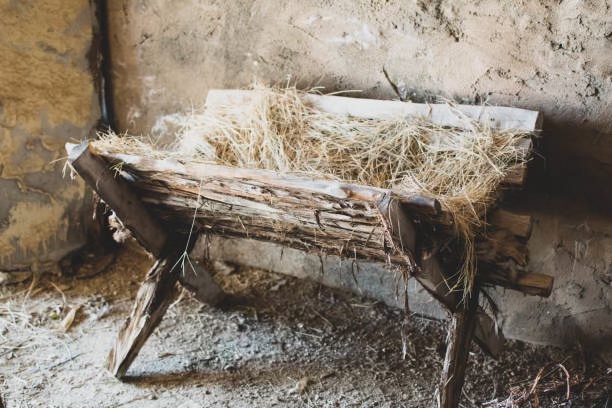
As part of our yearly Christmas traditions, our family erected a Nativity display, complete with a wooden stable, plastic barn animals, shepherds, an angel, three wisemen, Mary and Joseph, and baby Jesus in a manger. One year, however, baby Jesus disappeared. Although we searched high and low, He seemed to have vanished into thin air. When Christmas was over, we reluctantly packed up the stable, animals, and other important figures in the Christmas story, but baby Jesus, who was supposed to be the central figure of the scene, was still missing.
Sad to say, our family’s experience of losing Jesus has become a fitting metaphor for many of our lives at Christmas. We pull out all the seasonal décor, attend holiday parties, anticipate family gatherings, and make lists for how many gifts and cards we will be giving and sending to others. On top of all this, we are besieged with invasive displays and advertisements urging us to buy more and more things that promise to give us the joy and contentment for which we hope and long.
Of course, these promises are never fulfilled. There always seems to be a bigger and better version of what we have purchased by the time the next Christmas season rolls around. As a result, we frankly find ourselves exhausted and relieved when the whole holiday season is finally over. And when it comes to Jesus, the real reason for the season, He often gets lost and forgotten in the midst of all the clutter, commotion, and clamor.
While we are busy hanging lights, we forget that Jesus is the light of the world (John 8:12). Feeling the pressure to give everyone important to us a thoughtful and worthwhile gift, we forget that Jesus is the greatest gift of all (John 3:16). We struggle not to overindulge and overeat, forgetting that Jesus is the bread of life (john 6:35) and the fountain of living water (John 7:37-38). In all the hustle and bustle, we forget that Jesus promises rest (Matthew 11:28-30) and peace (John 14:27) for all who turn to and trust in Him.
Instead of finding Christ at Christmas, we find ourselves over-stimulated, overworked, overfed, and overwhelmed. As Christians, if this is how we experience Christmas, perhaps we need to ask ourselves an important question: In the midst of all that is Christmas, where is Jesus? Have I somehow missed or obscured Him in all the traditions and expectations, new and old, that now surround this increasingly hectic and frenzied season? Have I sought to keep Him at the center of it all, or have I let other things conceal, crowd Him out, and push Him away?
Fortunately, the aforementioned story has a happy ending. We never gave up hope that baby Jesus might appear someday, and several months later, He was found safely tucked away in my youngest daughter’s dresser drawer where she had laid and then forgotten about Him. We restored Him to His rightful place of centrality in our creche, and all was right with the world again.
Similarly, every Christmas, we have an important choice to make concerning Jesus. Because of all the distractions and expectations crowding Him out and drawing us away from the real reason for the season, we must decide: Will we let Him be lost in all the trappings and trimmings of this increasingly secular and market-driven holiday, or will we, like the wisemen and shepherds long ago, make Him the central focus of our interest by continuing to seek Him and joyously make Him known to all who will listen?
The rise of LGBT+ movement in our world today has produced a growing debate within the church about the nature of sin and temptation in relation to internal desires. The silver lining is that it has forced Christians to think more deeply and reflect more biblically on the nature of these questions.
In a very basic sort of way, I used to think that when ungodly desires arise, you simply avoid sin by resisting and not fulfilling them. But as I have thought more about same-sex attraction, there is an important difference from other kinds of desires. Not only is the fulfillment of same-sex desire wrong, the desire itself is something that ethicists call, “disordered.” That is to say, the desire cuts directly against the grain of God’s original creation order and would never arise in a pre-fallen world.
Adam and Eve, for example, certainly desired one another sexually before the fall and were able to righteously fulfill those desires in the context of marriage, but pre-fall, they would never have experienced same-sex attraction. That kind of desire can only arise after sin has entered the world. Thus, the desire itself is misdirected and one of the many results of sin and evil coming into the world. But here is where it’s easy to get confused.
Some Christians have assumed that same-sex attractions will (at least eventually) subside if we only continue to wrestle against them and repeatedly affirm and live out our new identity in Christ. Thankfully, for some this does result in a profound and lasting transformation of these desires, especially over time. For many others, however, disordered desires like these persist and continue to assert themselves in powerful and intrusive ways throughout their lives, even as they seek to forsake and resist them.
We therefore need to avoid the simplistic and judgmental attitude that suggests that mere repentance and resistance will inevitably and assuredly cause the desires to cease or be transformed into properly ordered (in this case, heterosexual) desires. This can even suggest that one of the primary goals of Christian holiness is heterosexual attraction rather than godliness. Again, merely practicing repentance and continual resistance and avoidance alongside affirmation of our new nature in Christ still may not fully resolve or eradicate all same-sex desires.
However, we should not be so quick to therefore dismiss these desires as neutral or nearly harmless, just so long as they remain unfulfilled in concrete practice. Unlike desires that are appropriate to creation order so long as they are fulfilled within the parameters set up by God in His word, same-sex attraction is inherently opposed to God’s creation order. In short, the desire itself is inherently rebellious and therefore dangerous and disordered.
This helps highlight the fact that avoiding sin and moving toward holiness involves much more than merely resisting certain behaviors. It also involves resisting inappropriate attitudes and desires. Jesus was very clear when he said in Matthew 5:28 that “everyone who looks at a woman with lustful intent has already committed adultery with her in his heart.” The phrase “lustful intent” (ESV) captures the idea here well. It is not the mere presence of a lustful thought, but the “lustful intent” and entertaining of that thought as well as a refusal to immediately take it captive and mortify it that results in sin. Such sin is still very real even though it is only committed within the heart and mind of the one who lusts and is prior to any concrete action to fulfill it.
To take the idea further, in Ephesians 5:3, Paul not only talks about high standards of sexual purity: “there must not be even a hint of sexual immorality, or of any kind of impurity,” just before this in 4:31 he also lists “bitterness, rage and anger,” as problematic, and not merely their results: “brawling and slander, along with every form of malice.” “Bitterness, rage, and anger” are not behaviors per se. They are, at their root, emotional states of mind that can easily set us on a trajectory toward ungodly (re)actions. And here Paul clearly demands that we should seek, by the power of His Spirit (5:18), to eliminate them from our lives.
Is same-sex attraction parallel to these kinds of sinful emotional states? James 1:14-15 helps answer this questions when it says, “each person is tempted when they are dragged away by their own evil desire and enticed. Then, after desire has conceived, it gives birth to sin; and sin, when it is full-grown, gives birth to death.” The progression here is that although the desire is described as “evil,” it only becomes sin after it “has conceived and gives birth” to a willful sinful mindset and not merely wrong actions leading to “death.”
It is still possible, for example, to be angry and yet not sin (see Ephesians 4:26). If I refuse to entertain same-sex attractions each time they arise, must I still repent simply because I experienced a disordered desire? Again, the desire to have sexual relations with someone of the same sex results from life in a sinful world and subverts God’s creation order. It must never be entertained, embraced, or fulfilled.
This stands in stark contrast to “normal” and “ordered” desires like heterosexual attraction. While these desires can be (and often are) badly abused and misapplied in very sinful ways, when fulfilled in their biblically-revealed (and therefore proper) contexts, they constitute the fulfillment of good and God-desired ends. A disordered desire, on the other hand, should always be resisted and understood as opposed to the goal of godliness. Thus, it is decidedly not a neutral desire.
Still, only when we let an evil desire fester and fail to take it captive does it actually become sin. As Martin Luther quipped, you cannot keep the birds from flying overhead, but you can prevent them from making a nest in your hair. The desires themselves might be wrong but having them does not automatically or inherently make me guilty of sin.
This has important implications for discipleship and how we characterize and deal with wrong and sinful desires. We know, for example, that toward the end of His earthly ministry Jesus desperately wanted to follow His own will by escaping the suffering and horrors of the cross (Luke 22:40-44). In short, He desired to do something other than God’s will. Just like the temptations at the beginning of His public earthly ministry delineated in Luke 4:1-13, it was another time of profound testing. But we also know that in the midst of that very human but clearly wrong desire to escape the cross and death, Jesus remained sinless (Hebrews 4:15).
It would be easy to simply say that every time I experience an evil desire or thought, I must repent. But that can lead to a profound sense of shame that may be unnecessary since the mere presence of a wrong and evil desire may not itself constitute sin. Yes, I might have to repent if I entertain or let that desire begin to move me away from devotion to Christ, but what I do at the moment of experiencing the desire, no matter how wrong, is what matters the most concerning whether I need to repent or simply resist and as quickly as possible find something—better, Someone—else to focus my heart and mind upon.
To briefly summarize, same-sex desire is disordered, pushing against God’s intended creation order. And while having such a desire is one result of living in a sinful world, having such a desire is not, in and of itself, automatically sinful. When desires like these come, we are called to actively resist and forsake them, taking them captive to the obedience of Christ (2 Corinthians 10:5). This will often require accountability and encouragement (and perhaps rebuke at times) from other Christians also seeking to be holy, but it is a journey toward wholeness and holiness well worth taking. Praise God, we also know the One who has gone before and walks that hard road of temptation with us, our battle-tested yet still perfect and sinless Savior and loving Lord, Jesus Christ.
I just watched the film, “Tortured for Christ,” and many years ago read the book of the same title. It’s about Romanian pastor, Richard Wurmbrand. Opposing the Communist regime, he was imprisoned for fourteen years and repeatedly and brutally beaten for his refusal to forsake his Christian faith.
In his own words, “It was strictly forbidden to preach to other prisoners. It was understood that whoever was caught doing this received a severe beating. A number of us decided to pay the price for the privilege of preaching, so we accepted their [the communists’] terms. It was a deal; we preached and they beat us. We were happy preaching. They were happy beating us, so everyone was happy.”
While watching the film, I was deeply convicted that I have suffered almost nothing in order to follow Jesus Christ. When Jesus told us to make disciples, He did not tell us to build large buildings and put on entertaining services so that we could fill them with passive pew-sitters. He told us to go and make disciples everywhere we went. And before that, He called us to be disciples ourselves, not considering our lives as precious, but giving them away and pouring them out in service of Him for His greater honor and glory.
I have to ask myself often and honestly, am I really and truly a disciple of Jesus? The reality is, being His disciple, as well as making disciples, is extremely difficult. It is backbreaking, heart-rending, self-effacing work. And following Jesus involves more than theoretical sacrifice. It involves making concrete commitments and costly choices to follow that might result in becoming uncomfortable, being fired, straining relationships, and losing popularity. For some, it could even mean far more—a significant loss of freedom and/or the forfeiture of one’s life.
When Peter and the apostles were arrested and questioned by the Pharisees for sharing the good news about Jesus, Acts 5:40-42 tells us that the Pharisees “beat them and charged them not to speak in the name of Jesus, and let them go. Then they left the presence of the council, rejoicing that they were counted worthy to suffer dishonor for the name. And every day, in the temple and from house to house, they did not cease teaching and preaching that the Christ is Jesus.” They were willing to suffer and even die for Jesus because they trusted, loved, and wanted to honor Him. Any difficulties endured for His sake were a privilege to thank God for, not a hardship or humiliation to be avoided at all cost. And as they obeyed Him, they experienced deep and genuine joy.
While I know in theory (and by limited experience) that there is great joy and fulfillment in following Jesus, no matter the risk or cost, I am still constantly tempted to make my life more comfortable, less arduous, and inoffensive. I often love the world more than God, because I do not really believe he deeply cares for me and is a loving, gracious God. I constantly think I know better how to live my life because I do not really believe God is wiser than I. I repeatedly give myself over to sin because I do not really believe that the holiness of God is what I was designed to reflect and exhibit in this world. And ultimately, I continue to fear hardship, suffering, and death because I love the things of this life more than the eternal things of God. I don’t really believe that heaven will be magnificently, indescribably better than even the sweetest and most joyous moments in this life.
Am I a disciple of Jesus? In the broadest sense of that term, I hope I can answer yes. But in the concrete daily struggle to be faithful, I must admit, I am a continuous and consummate failure. And yet, in His grace, He still offers the promise that He is with me always, even to the end of the age. For all my foibles, failures, fears, and faithlessness, He remains faithful and promises that He will never leave or forsake me. He is still in the process of making me His disciple and, praise God, the journey toward joy is only just beginning!
Just before Jesus’ death, the disciples were marveling at the magnificence of the Herodian temple. As Mark 13;1-2 puts it, “And as he came out of the temple, one of his disciples said to him, ‘Look, Teacher, what wonderful stones and what wonderful buildings!’ And Jesus said to him, ‘Do you see these great buildings? There will not be left here one stone upon another that will not be thrown down.’”
Herod’s temple seemed impregnable. It stood within one of the best protected cities in the ancient Near East. In addition, it was one of the most magnificent structures of its time and at that point in history, had taken almost 50 years to build. Even more than this, the temple was the sacred place where almighty God dwelt and was worshiped. How, then, could it possibly be destroyed?
Less than 40 years later, the Romans set it on fire and razed it to the ground.
Not long ago, I was walking around Singapore marveling at the city’s majestic buildings, bustling economy, clean environment, and proactive government. All seemed right with the world and I couldn’t help but wonder, what could possibly bring down such a towering edifice of human ingenuity and safeguarding as the nation-state of Singapore? Everything seemed so carefully controlled and well thought-out.
Of course, I knew in theory that if God wanted to bring the nation down, He could do so in a moment, but that possibility seemed so utterly remote and unlikely, it felt like an implausible distant dream. It’s amazing how a dream can become a living nightmare in just a matter of days or weeks.
It was not a military or alien invasion, nor was it a massive corruption scandal that brought Singapore and the rest of the world low. No, it was a microscopic virus called COVID-19 that brought this grand illusion of control crashing down, shattering it into a million little pieces. Try as we might, this intrepid microbe is finding ways to slip through the tiniest cracks of our lockdowns and quarantines, infecting and sometimes killing the rich and the poor, the great and the small, the important and the insignificant.
Try as we might, times like these remind us that we are decidedly not in control—and never really have been. As Psalm 33:10-22 so aptly puts it, “The Lord brings the counsel of the nations to nothing; he frustrates the plans of the peoples. The counsel of the Lord stands forever, the plans of his heart to all generations. . . . The Lord looks down from heaven; he sees all the children of man; from where he sits enthroned he looks out on all the inhabitants of the earth, he who fashions the hearts of them all and observes all their deeds. The king is not saved by his great army; a warrior is not delivered by his great strength. The war horse is a false hope for salvation, and by its great might it cannot rescue. Behold, the eye of the Lord is on those who fear him, on those who hope in his steadfast love, that he may deliver their soul from death and keep them alive in famine. Our soul waits for the Lord; he is our help and our shield. For our heart is glad in him, because we trust in his holy name. Let your steadfast love, O Lord, be upon us, even as we hope in you.”
Whatever our illusions of control may have been, COVID-19 confronts us with the fact that God can use the very great or (in this case) the very small to bring an entire planet to its knees. While on our knees, may we be found praying prayers of hope and faith in the only wise and sovereign God who still deeply loves and cares for each and every one of us.
With the COVID-19 outbreak, stock values worldwide have plummeted over the past few days. I have not bothered to find out how much my retirement portfolio has already lost since the days and weeks ahead will likely become worse.
Being significantly closer to retirement age than when I started in ministry, I confess, everything that’s happened recently has me thinking about questions of provision. Will there be enough to eat and live on in the days ahead? Over the long-haul, will our financial support significantly shrink in the wake of job and market losses? Will I be able to leave an inheritance to my children’s children?
When Cru founder Bill Bright and his wife, Vonette, were approaching retirement, they decided to liquidate their retirement account to help advance the fulfillment of the Great Commission around the world. In so doing, they believed God would provide their needs in old age.
Later, when Bill was 74, he was awarded the one million-dollar Templeton prize for advancing spirituality in the world. Any normal couple might have concluded that God had honored their faith and provided for their retirement through this rather exceptional means. Instead, Bill and Vonette once again gave it all away, this time to promote a global movement of fasting and prayer. Seven years later, Bill died, and Vonette joined him twelve years after that.
When visiting Bill’s grave in 2014, I remember thinking it was nice, but relatively simple and non-ostentatious considering he was the founder of one of the largest and most influential Christian organizations of the 20th century. One thing was clear, however. Bill and Vonette truly understood what few of us ever will. They knew that when they died, they would leave behind all earthly goods and spend eternity enjoying the unending treasures of intimacy with the Lord Jesus Christ. In that light, no earthly shortages or privations really mattered anymore. They were convinced that God was fully faithful and would always meet their basic needs in this life—and so He did.
He will do no less for us as well, even if our jobs are lost and our retirement accounts drain away to zero. We can still praise and hope in God, echoing the faith-filled words of the Prophet Habakkuk: “Though the fig tree should not blossom, nor fruit be on the vines, the produce of the olive fail and the fields yield no food, the flock be cut off from the fold and there be no herd in the stalls, yet I will rejoice in the Lord; I will take joy in the God of my salvation. God, the Lord, is my strength!”
Since the Covid-19 virus impacted Asia long before the rest of the world, we’ve been living under various restrictions here in Singapore for over a month now. It’s given me some time to reflect on life, death, and seeking a greater faith in God.
The fact is, apart from the second coming of Jesus Christ, we will all die someday. The only question is, how and when? As Christians, we really shouldn’t fear death, although most of do if we’re honest. And I confess, I am by nature a fearful person. Although I became a Christian very early in life, some of my earliest childhood memories included the (irrational) fear that I would get sick and die young of some terrible disease. I suppose it didn’t help watching movies like, “The Andromeda Strain,” and “The Omega Man,” but I always found it difficult to release these fears and trust in the goodness and faithfulness of God.
I take some comfort in the fact that fear is nothing new, and the Bible talks a lot about it. The simple but profound phrases, “do not be afraid” and “fear not,” are found 67 times in the ESV translation of the Bible. In Matthew 6:25-34 alone, Jesus mentions anxiety six times. Closely related positive variations on this theme (“trust/hope in God”) occur numerous additional times as well. It would seem that all human beings, Christians included, are incredibly prone to fear and need to learn (and constantly relearn) to trust in God’s wisdom and goodness.
With the recent pandemic, it’s incredibly tempting to let anxiety and fear strangle our faith in God. Surprisingly, I have been experiencing a profound sense of peace in the midst of all the clamor. In many ways, I am more concerned about the inconveniences of widespread and long-term lockdowns and shortages than I am about death. After all, death for those in Christ merely means experiencing true life forever in the presence of God! Why in the world would I fear that kind of everlasting hope and joy? In the words of the Apostle Paul, “that is far better” (Philippians 1:23)! In the meantime, however, all of us must continue to struggle to trust God through the vicissitudes—and viruses—of life.
How do we do that? The answer is neither hidden nor profound. We ask Him for His grace to live in faith when it’s much more natural to live in fear. We let the peace of Christ reign in us when panic tries to take over and push Him from the center of our hearts. And we offer our lives as living sacrifices for God’s glory so that whether in life or in death, our lives remain safely held within His wise and loving hands.






 lewinkler