Category Archives: Contemporary Culture

I Can’t Keep Up

Can't Keep Up

I can’t keep up.  As a theologian, ethicist and apologist, I am expected to keep close watch on changing cultural trends and contemporary challenges to the Christian faith.  Thoughtfully, creatively, and responsibly applying scripture to the ideological and moral movements of our time is a critical part of the theologian’s task to help God’s people be faithful to Jesus and witness well to a world who desperately needs Him.

However, that enterprise requires not only knowing scripture well but also knowing culture well.  And I can’t keep up.  The accelerating cultural transformations occurring in my lifetime are nothing short of astonishing.  I am especially overwhelmed by the pace at which new ideas, trends, and changes are flooding the public square through the ever-open outlets of media and internet.  I feel a little like Rip Van Winkle who took a short nap, only to wake up and find that life had passed him by.

I once thought email was something new, exciting, and useful only to find it hopelessly passé and archaic in my kids’ generation.  Instead, there’s Facebook, Skype, SnapChat, Instagram, Twitter, Hangouts, ChatON, and a rapidly growing host of other social media outlets I’ve never even heard of, all enabling us to stay connected with everyone and everything considered new and exciting.

And with all that is currently happening in our virtual social arenas, who has time to pause and consider the meaning and significance of the past, let alone the present?  In fact, a new philosophy called “presentism” (first coined in 1923) has grown up and matured in this media-saturated environment.  According to presentism, all that truly matters and all that’s really “real” is what’s happening right now in the present.  Everything else is relatively unimportant and insubstantial.

Is it any wonder we are less and less inclined to study subjects like history, philosophy, and classic art and literature?  We are so consumed with keeping up with the present, we have lost interest in and think we have no time for the past.  We have become afraid of being laughed at, excluded, of falling behind everyone else in the unending rush to know about the now.

So, how do I keep up?  I’m convinced this is the wrong question.  In The Four Loves, C. S. Lewis reminds us that, “All that is not eternal is eternally out of date.”  Thus, the better question is, “How do I become an increasingly faithful Christ-follower and effective witness to those around me?  How do I stay connected to the eternal God who forever holds the past, present, and future in His wise and loving hands?”  Only then will “keeping up” no longer have first place in my life.  Instead, faithfulness to the One who created and stands both in and out of time is all that really matters, for He puts everything and everyone else into proper perspective.

God alone can empower me to choose wisely concerning how much—or how little—I “keep up” on contemporary social media, fashion, celebrities, news, sports teams, gadgets, and the rapidly changing ideological engines that mold and drive them on.  But I am no longer compelled to be “up to date” simply for the sake of being relevant.  By remaining in close fellowship with God, He reveals how best to navigate the contemporary in light of not only the past and the present, but also the magnificent future He has planned for all who seek to love and serve Him now and for all eternity.


On Sloth and Writing Well

Writing

In the field of writing, I have to admit, I envy the brilliant and productive, the disciplined and accomplished.  Like many others, I wish I could write dozens of books and articles and be a well-known published author and professor.  But there are two things I lack that those who do such things do not.  I lack both brilliance and diligence.

While all minds can be developed, true intellectual brilliance is something only God can give (or take away), so there’s no use in asking God, “Why did you make me this way?” or bemoaning the fact that when it comes to intellectual capacities, all people are not created equal.  A lack of industry, however, is something for which I certainly bear some responsibility.  But two main barriers stand in the way of such due diligence.

First, I want life to be easy.  I want things to flow magically from my mind to the page without significant energy being expended.  I want all of my writing to be instinctively and effortlessly inspired, all of my ideas to be clear, profound, and succinct.  I don’t want to have to work—and work hard—to produce those kinds of masterpieces!

Second, I like making excuses for why I have not been able to do more and produce more.  That way, I am not consciously accountable to God or the Christian community for my laziness and lack of intentionality.

The traditional word for these attitudes is sloth.  It’s a good word and one that has fallen out of favor in our leisure-obsessed society.  We like to be entertained and dazzled by the greatly gifted not so much because we can see God’s grace given to us in the midst of a pain-filled, sin-stained world, but because we like to experience the joy of amazement and enlightenment without putting forth much personal effort.  Why learn and produce music when I could listen to someone else create and sing it better?  Why write when someone else can say it more eloquently for me?

In Genesis 2:15 God gave human beings a mandate—a mandate linked to our nature as image-bearers.  That mandate was a creative one.  We were place in the world, placed in the garden “to work it and keep it,” to cultivate and be productive as a way to reflect God’s creativity and productivity in the world, as a way to honor Him as image-bearers.

I am almost 50.  Now is the time most in academia consider to be the “productive years” of a teaching ministry.  Now is the time when my mental faculties are still sharp and I am supposed to have the accumulated knowledge and wisdom that is worth sharing—and sharing well—with others.  To be sure, a large part of that takes place in the classroom and through ongoing friendships, mentoring relationships.  It also happens in the home and in the community as I interact with my immediate and extended family, with strangers, co-workers, and acquaintances.

But in the midst of all this, God keeps giving me ideas and pushing me to write them down and think about them more—to mold and shape them into something worth reading and considering and applying.  This is a stewardship that I simply must offer back to Him with both gratitude and sobriety.  I am deeply thankful for the insights He has bestowed upon me, but I am also sobered by the responsibility to be a good steward of those insights.

In this sense, I do not write to be published, to be noticed, to be impressive, or even to be helpful to others, as much as I want my writings to be.  I write to honor the One who calls me to write and gives me the motivation and ability to do it.  What He does with it after that is His business.  I only need to be faithful and depend upon Him to empower my efforts.

Oh God, save me from sloth.  Save me from a scattered and indifferent life that would bring You less glory than You so obviously and magnificently deserve.

Evangelicalism and the Mega-church Movement

Mega Church

It seemed like in the late 1980’s and early 1990’s all the talk was about churches that had experienced meteoric growth in ridiculously short timeframes.  But the deeper question was what was actually happening in the lives of those attending church?  Was genuine discipleship leading to life transformation taking place?

Not long ago, Bill Hybels, one of the early gurus of the evangelical church growth movement, took a survey to examine more closely the lifestyles and beliefs of his mega congregation.  What it revealed was both discouraging and alarming.  These evangelicals were not appreciably different from unbelievers outside the church.  To his credit, Hybels showed wisdom and humility by looking honestly at the results and decrying his mega church movement as largely a failure since it did not lead to substantial life change.

But over the past thirty years, almost everyone was drinking in and following the techniques and methodologies of these “successful” mega church movements.  People were coming to church in droves, but what were they coming for and what were they taking away from their experience?  I would venture to say that many of these people came to be inspired, entertained, and encouraged, but not necessarily to be transformed and do the hard and arduous work of becoming a genuine disciple of Jesus Christ.

The same ideologies also infected our youth ministries.  Young people came to the church in droves because it was good clean fun and inspiring entertainment.  But when life offered new and seemingly better alternatives, many of these young people moved on to other venues and avenues of personal fulfillment.  And so we watched a generation of our youth slip quietly away from the church.  All the great music, all the engaging talks, all the relevant video clips, all the fun and fanfare—in short, all the awesome entertainment—failed to make true disciples of Jesus Christ.

Following the pundits in Hollywood, we created parallel personality cults with a Christian label—safe and wholesome for the whole family.  We delegated the discipleship of our children to Sunday sermons, children’s church, and youth pastors, forgetting that our children were watching us every day to see what our lives were really like in the home when no one else was watching.  And they saw the shallowness, the hypocrisy, the refusal to sacrifice ourselves for the sake of the cross.  They saw our immoralities, our divorces, our abuses, our indifference, and misplaced passions.  I personally witnessed two different pastors of two different churches I was deeply involved in during the 1990’s divorce their wives.

And so before these silent watchers, we failed and failed badly.  But we still had to pretend that our lives were almost perfect because everyone else in our church came each week with bright and shining faces.  Who would understand?  And what if we were in ministry?  Wouldn’t we lose our credibility and perhaps even our jobs to those “super saints” who always seemed to have it all together in every kind of weather?

In the end, we had huge numbers but not huge impacts because we were taken in by the subtle assumptions that full sanctuaries and full coffers translated into fully committed Christ-followers.  Not only were we tragically, utterly wrong, we should have known better at the very beginning.

Am I discouraged?  Yes, some.  It’s been disappointing and painful to watch the confused, divided, and largely ineffectual response of the church to growing and rampant immorality.  And it’s been hard to look at my generation of evangelical leaders and see that I am one of them and face squarely the fact that the rapid rise of the global feel good “heath and wealth” gospel—which is not the gospel but heresy—happened on my watch, that the legalization of recreational pot use happened on my watch, that the euphoric celebration of homosexuality and legalization of gay marriage happened on my watch, that the worldwide proliferation of pornographic filth happened on my watch, that the spread of abortion on demand to virtually every nation of the world since 1973 happened on my watch.

But what do we do now?  What is the solution?  Do we keep trying to produce a better show, building bigger buildings, creating better programs?  Or do we go back to the hard and rather unexciting basics of making true disciples through a painstaking and messy process of doing evangelism and forming small-groups that are characterized by genuine accountability and intimate relationships displaying honesty, humility, brokenness, and yet a growing holiness and passion, alongside a deep and persistent love for God and His word?  And do we teach our disciples that to follow Jesus means to suffer and die, often each and every day?

In my estimation, the only way forward is to move backward through the cross, taking it up daily to follow Jesus no matter what the cost, no matter how intense the persecution, no matter what the outcome or results might be.

Will you follow Him?  Will I?

Is Jesus really the “only way?”

Image

In John 14:6, Jesus responds to His disciples’ request to show them the way to God the Father.  He responds that it is only through Himthe way, the truth, and the life—that anyone can come to God the Father.

Though many have tried to ignore or explain such statements away, it seems clear from the context that Jesus claims that He alone provides the one and only way of salvation.  Yet this “extreme exclusivity” goes directly against the grain of our global and relativistic sensibilities.  Who, in this day and age of religious and cultural plurality, could make such an audaciously narrow and arrogant claim?

It is important to remember that the society of the first-century Roman Empire was equally, if not more, pluralistic than the contemporary world in which we live.  Jesus’ claim to be the only way to salvation would have offended pluralistic Roman sensibilities as much as any postmodern thinker of today.  In addition, the conservative Jewish community of the first century did not miss the fact that the human person, Jesus, was making these outrageous assertions.  In fact, they condemned him under the charge of blasphemy since He, being a man, made Himself out to be God (John 10:33).

Jesus, through this one statement, offended the liberals and the conservatives, the exclusivists and the pluralists, in a single breath.  Who would say such an unpopular, polarizing, and dangerous thing unless it really was the case?  After all, it wound up getting Him crucified on a cross.

But this is where His resurrection becomes so glorious and important.  The fact that Jesus did rise from the dead concretely confirms the claims He articulated about Himself.  Only God incarnate could make such an outrageous claim and then prove it to be true through the prediction and fulfillment of His own return from death to life.

In fact, it was for this conviction that His followers risked their very lives so that the gospel of Jesus would be proclaimed to every tribe, tongue, and people group.  Peter made it crystal clear in Acts 4:12: “And there is salvation in no one else, for there is no other name under heaven given among men by which we must be saved.”

It is this same conviction that compels every follower of Jesus to “go into all the world and preach the gospel to all creation” (Mark 16:15).  Why bother if God could save us and the rest of the world some other—perhaps much easier—way?  But here is where we must come face to face with the reality of God’s truth: there is no other way.  It was this conviction which drove early Christians to not only turn “the world upside down” (Acts 17:6), it drove them to spend—and often lose—their lives to proclaim the name of Jesus to everyone who would listen, knowing that “it is the power of God for salvation to everyone who believes” (Romans 1:16).

Like Jesus and His first-century followers, we too are called by God to share the gospel with everyone as clearly as possible and soon as possible—in season and out of season—whether it makes us popular or winds up getting us killed.  This is Christ’s call to us, to “take up his cross and follow” Him (Matthew 16:25).  Are you truly willing?  Am I?

Living the Life God Meant You to Live

Image

Growing up in church, I heard a lot about Jesus’ resurrection.  Even as a young child I realized it must be important, but somehow failed to appreciate it as anything more than another interesting historical event in the life of Jesus that all good Christians were supposed to believe.

And every Easter I heard about the intellectual and historical reason why we should believe Jesus rose from the dead:  According to 1 Corinthians 15:6, there were more than five hundred eyewitnesses to the resurrected Lord.  Friend and foe alike admitted the tomb was empty.  The disciples gave their lives for the unwavering conviction that Jesus rose from the grave.

Only later in my Christian walk did I begin to more deeply understand that while the raw fact of the resurrection is a critically important and foundational truth supporting the basic infrastructure of Christian belief (e.g., 1 Corinthians 15:14-20), the significance of Jesus’ resurrection went far beyond historical claims about the life and death of Jesus.  It was more than a fact to be believed.  It was a present spiritual reality to be empirically evident in the daily life of every believer.

Paul makes this very clear in Romans 6:4-13 where he explains that just as Christ was raised from the dead, believers in Jesus have also been raised with Him that “we too might walk in newness of life.”  Everything that was wicked and wrong about our lives was nailed to the cross and left in the grave after Christ’s resurrection.  We have been freed by the resurrection to obey God and live again in a way that was previously unattainable and unimaginable.

The power and fear of death have been conquered!  The law no longer condemns us!  Sin no longer has any mastery over us!  Through Christ’s resurrection power we are finally free to be “instruments of righteousness” (verse 13) and live the life God meant us to live; a life of unmatched love, grace, confidence, joy, and holiness, a powerful, beautiful, wonderful life!

Easter is more than just the fact of the resurrection, although that fact remains the bedrock of all that flows out from it.  As Christians we are called to proclaim the fact of the resurrection not only as an historical event, but also as a living and present reality.  And that proclamation is heard most clearly when we incessantly live truly holy lives freed from sin and released to be instruments of righteousness through the power of God’s gracious Holy Spirit.

This Easter—and every day which follows—let God play upon the instrument of your life the sweet melody of His beautiful holiness so that others can hear, respond, and embrace the forgiving, transforming power of Christ’s transforming resurrection!

The Evolution versus Creation Debate

Image

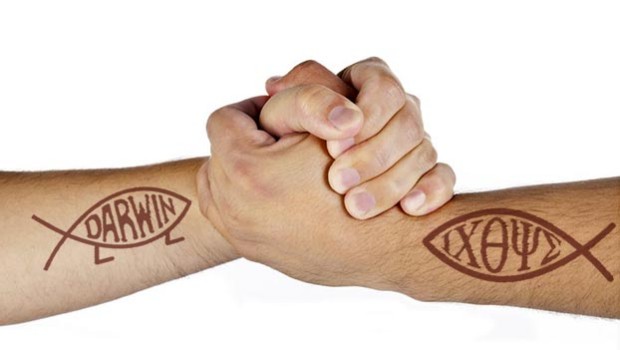
How valid are the claims of Darwin?  What proof is there for his ideas and the more recent scientific conceptions of his theories, now called, “neo-Darwinism”?  Is evolution really “A Theory in Crisis” to quote the title of non-Christian scientist Michael Denton’s book?

Since many sincere Christians believe in evolution without throwing away their need for a creator in the process, I want to clarify right away that in talking about evolution and creation, I am referring to two very different perspectives.  By “evolution,” I mean atheistic or non‑supernatural evolution which, at its root, denies the possibility of God being involved in the process in any way.  When I speak of “creation,” I am referring to the need for a Creator, a divine being.  In addition, for clarity and brevity’s sake, I will put aside the “young earth/old earth” debate.

What, then, is the evidence for evolution versus creation?  To begin with, one of the really difficult unsolved problems in evolution is the question of how living organic organisms evolved from non-living inorganic compounds and processes without the aid of any intelligent design or direction.  The scientific search for a purely natural mechanism to bring life from non-life has been consistently fruitless.  In Michael Behe’s Darwin’s Black Box, Behe points out that the chance that even a single cell could evolve without outside direction from an intelligent source is a mathematical impossibility.  The search for a non-directed mechanism is certainly not dead among scientists, but it is taking on new and increasingly desperate twists.

Panspermia: The Outer-space Connection

It is no surprise, then, that some high-level scientists are seriously entertaining a theory of what is now called, “panspermia.”  In light of the formidable difficulties of life arising from non-life on planet earth without the help of an intelligent designer, some theorize that life here was initially brought (either accidentally or intentionally) from outer space.  Perhaps, it is thought, the seed of all life here was planted by a meteor, or even by other intelligent alien life forms.

As potentially ridiculous as this sounds, it is now a viable theory to many atheistic scientists trying desperately to escape the clutches of the real theoretical problems evolutionary theory cannot adequately solve.  But panspermia solves nothing, for it retreats into the unassailable fortress of agnosticism by suggesting that since life came from some other place in the universe, there is no way to confirm or falsify the theory, knowing that there is (so far) no viable way to find or travel to these places and test the theory.

Where did everything come from in the first place?

But even if we accept—just for the sake of argument—that life originally did come from some place other than planet earth, does evolutionary theory offer an adequate explanation for the origin of the basic raw materials of the universe as a whole?  It does not, because it must assume the eternality of matter to do so.  But this is an assertion that science itself, through the discovery of laws like the conservation of matter and the second law of thermodynamics, has shown to be extremely unlikely, if not impossible.

For Christianity, of course, none of this is a problem.  We recognize the need for an eternal, intelligent and powerful designer of creation, especially since this is precisely what the Bible teaches (Genesis 1:1).  As well, the fact that God created living things with the capacity to adapt and change in response to environmental fluctuations is obvious.  This is what biologists call, “microevolution,” “speciation,” or “adaptation.”  But there are inherent natural limits to this sort of biological change, refuting the notion of “macroevolution” where one type of animal (say, an amphibian) somehow becomes another type of animal (say, a reptile).

Punctuated Equilibrium and the “Hopeful Monster”

This failure to demonstrate the possibility of macroevolution has led some scientists to propose a theory of “punctuated equilibrium.”  This theory claims that genetic changes remain externally unexpressed until at some “critical mass” point, the genetic traits are very suddenly and completely expressed in a whole new type of creature or anatomical feature.  Thus, an amphibious newt suddenly gives birth to a fully formed and functional reptilian lizard.  Most scientists try to steer clear of such “hopeful monster” theories, but the theory is really just an honest and desperate attempt to encapsulate what is required from the evidence of the fossil record.  What do I mean?

The Problem of the Fossil Record

The fossil record clearly points away from Darwinian theories of gradual trans-typical change.  That is, new types of animals essentially “appear out of nowhere,” remain morphologically stable for a while, and then “pop” back out of existence.  And the same is true for so-called, “living fossils,” like the coelacanth, and the tuatara.  These are living animals that suddenly and completely “disappeared” from the fossil record and then mysteriously showed up in modern times, virtually unchanged.

If Darwin were right, we would expect to see more transitional forms in the fossil record, which we do not.  In addition, virtually all examples of “demonstrated” transitions (like horse and human evolution) are highly debatable in the first place, and have been subjected to intense (and warranted) critical analysis and refutation.

One Fatal Flaw

All of this points to one fatal flaw in atheistic evolutionary theory, the unspoken assumption that life in all of its astounding complexity and beauty must have arisen from solely natural processes.  However, after more than a century of searching for the mechanisms of evolution, one consistent theme emerges: the universe (and life on planet earth in particular) was created and designed by a magnificently powerful and intelligent agent.

Indeed, God has not left Himself without a witness in the world that He has made.  As Romans 1:20-22 states: “For since the creation of the world His invisible attributes, His eternal power and divine nature, have been clearly seen, being understood through what has been made, so that they are without excuse, for even though they knew God, they did not honor Him as God, or give thanks: but they became futile in their speculations, and their foolish heart was darkened.  Professing to be wise, they became fools.”

It is clear that, “The heavens are telling of the glory of God; and their expanse is declaring the work of His hands” (Psalm 19:1).  May we be wise and not foolish, by honoring and giving thanks to “the God who made the world and all things in it.  For in Him we live and move and exist” (Acts 17:24, 28).

Mind over Matter or Matter over Mind?

Image

I love playing basketball.  But at forty-nine and counting, I am not sure how much time I have left on the court.  Over the years, I have certainly changed the way I play the game, especially more recently.  I shoot more, run less, almost never drive to the basket, and defend with much more reserve.  I also know that one wrong step, one unforeseen collision, one ill-advised twist or turn, could blow out a knee, rip a tendon, or shred what little cartilage I have left in my joints.

But even if I were able to remain relatively injury-free over the next few months and years, the end will someday come, be it three years, five years—dare I hope for ten?  Eventually, I will succumb because everyone succumbs.  The monster becomes the midget, the fast the feeble, the dominant the dominated.  My father somehow played basketball into his early sixties.  His pastor, who played with him, called him a “freak of nature.”  But even my dad had to call it quits—although it took the need for a knee replacement to make him hang up his high tops for good.

Growing up I was sometimes told I could pit “mind over matter” and challenge the limits of my physical abilities.  To be fair, it was intended to prevent me from making excuses that I couldn’t do something because it was “too hard.”  But at the same time, age has had a way of changing the rules regarding certain things.  As time passes, I would like to think I’m learning some important lessons in humility, and one of them is the fact that sometimes matter wins over mind.  As much as I want to, I simply cannot do everything my mind desires and tells my body to do anymore.

When Psalm 90 reminds us to “number our days” it is for a very good reason—so that we might become wise.  Although I love the game of basketball, my playing days are rapidly coming to a close.  And what matters most when the end does come is that I arrive with a heart and mind full of wisdom.  Wisdom, unlike so many other things in life, does not have to diminish with age but can continually increase.  This is one reason Proverbs 3:13-15 says it is more precious than gold, silver, or costly jewels.  And, of course, wisdom tells me not only that sometimes matter rules over mind, it tells me the basketball court is no place for a tired and broken down old man.

Maybe it’s time to use my mind to rule over matter and look into coaching!

Am I a great teacher?

Image

I am I a great teacher?  I often ask myself this question, but at the same time, I need to ask myself why I am asking myself this question?  That is to say, why do I want to be a great teacher in the first place?

Do I wish to be a great teacher so I can get one of the exceedingly rare and highly-coveted jobs at one of the few seminaries in the US teaching and training an increasingly shrinking clientele base of North American evangelicals and who increasingly cater to that blessed and growing cadre of saints who are now coming more and more from the global south and east?

And do I want such a job so I will no longer have to live on the other side of the planet from the rest of my family and continue to struggle to find my way in a strange and foreign land?  Am I tired of laboring through the sometimes humiliating and difficult—and yet exciting and rewarding—process of trusting God to raise the support that we need and regularly stay in touch with and remain accountable to supporters, family, and friends?

Or perhaps I desired the imagined the comforts of sitting in an beautifully decorated office, or lounging out on the well-kept greening lawn, or eating in the newly renovated cafeteria with a well-brewed cup of tea, arguing—ahem, I mean discussing—and talking with my brilliant colleagues about God, theology, ethics, and the latest political scandal—rather than having to cry out constantly to God for a more fervent faith, a deeper understanding, and a greater grace?

Or is my desire even baser and more sinister (if that is even possible) than all of these?  Do I want to be a great teacher because I have some deep and idolatrous inner need to be impressive, loved, admired, famous, desired, and sought after?  Alas, it may be a despicable and twisted concoction of all of the above.

If there is any hint of such desires in my heart, I repent, Lord, and ask You to cleanse me once again of such lurid longings to be comfortable, to be “respected,” to be great in my eyes or in the eyes of others.  Transform my desire to be a great teacher into a desire to ever more clearly and consistently reveal and bring You glory.  Make it so that if people seek out my teaching it is only because in seeking it, they find they are both seeking and finding You, and You alone, for You must increase, but I must decrease.

Reflections of a Tired, Grateful Father

Image

I glanced over at four-year-old Bethany the other day and found myself deep in reminiscent thought. The birth of our second daughter, Christine, has brought a flood of fond memories back to me concerning the early days with Bethany.

For Bethany, life is a constant and desperate sprint to become “older.” Her wishes are quickly becoming a reality. We have often heard from seasoned veteran parents that children grow up much too fast. They beg us to enjoy the present, for it all too soon becomes the past. I can see more clearly every day how true this really is.

Looking at Christine reminds me how quickly babies become toddlers and toddlers become children; and how all too soon, children become teens and then adults. Somewhere in the madness, Bethany passed through the toddler stage. She is now a little girl with longings, joys, sorrows and hopes all her own. School looms much larger now on the horizon of her future.

Soon, she will be a woman and Joshua will be a man. And yes, even little Christine will make her way to adulthood in just a passing moment, for time looking backwards seems to have a wrinkle in it. Every instance in the past viewed from the present has an element of immediacy. It is almost as if nothing separates the historical event from the current recollection. We glance back and seem to see no space in between the present and the past.

Our existence is this way. It requires a lifetime for reality to pass us by, but as we look back upon it, from the end to the beginning, only a second has expired on the universe’s clock. My life as a father is just beginning, but already it seems so instantaneous, like it will be over in only a moment.

At a Promise Keepers conference in San Diego, speaker Ken Davis talked of his own experience as a father. He put it this way: “Right after my daughter was born, she reached out and grabbed a hold of my hand with her precious little fingers. And I made a mistake. I blinked. And when I opened my eyes, she was letting go of my hand as I gave it away in marriage.” This season of my life as a father will, I am sure, be similarly brief.

“You turn men back into dust . . . For a thousand years in your sight are like a day that has just gone by . . . . The length of our days is seventy years—or eighty, if we have the strength. . . . For they quickly pass, and we fly away. . . . Teach us to number our days aright, that we may gain a heart of wisdom.” Psalm 90:3-4, 10, 12.

There have been some tired moments and some late nights in the midst of all this chaos. It is during those times that I find myself most inclined to walk away from the effort, the heartache, and the sacrifice of raising children in a modern world.  But it is also during these times, I find myself reminded of several things. Not everyone has the privilege or responsibility to raise children. God has placed the tremendous task upon my shoulders for some reason that He alone can know. And the task is a burden I am not fit to carry. God alone can walk with me and pull me through this fire.

How I long for my children to know and serve Christ more fervently than I have ever done. I long for them to change, to mold the future of our world, even as God is using them to change and mold my own faulty character as a father, as a husband, as a Christian in a godless world. How I long for them to be like Christ despite my frequent failings.

In the midst of this season of life, I remain a tired, but grateful father. And I would not trade places with anyone else in this world. During those deep dark nights, even within the din and the cacophony, God’s voice, and the voices of countless others who have gone before me, whisper softly and relentlessly in my ringing ears, “It’s worth it. Treasure these moments and never forget that it’s worth it.”

God’s Exceptional Use of the Exceptionally Unexceptional

Image

When I first started walking closely with the Lord in college, I confess had a highly romanticized view of the missionary life.  I thought it entailed living in exotic foreign lands, trekking boldly through nearly impassible jungles, sleeping in grass-roofed huts, and possibly even giving my life so that some forgotten tribal group would finally hear the gospel and surrender themselves to Jesus.  I also thought that only the exceptionally committed Christians would make good missionaries, and that “normal” Christians would never make the grade because God only wanted and used the best and the brightest.

It took me awhile to shake off this somewhat “Hollywoodized” version of the truth.  I suspect it was not completely corrected until after 2006 when our family finally ventured off to follow God and live in Singapore.  It was here I learned a more accurate vision of what missionary life really involves.  No matter where God calls you to serve, whether the dense jungles of central South America, the concrete jungle of a city like Singapore, or somewhere in between, true missionary life is saturated with the mundane and unexciting realities of everyday living.  And the vast majority of missionaries are incredibly average people, even in their walks with God.

Sure, in serving God, we have had some amazing stories to tell and some remarkable opportunities and experiences to share, but these are not the point at all.  This kind of pursuit of sensationalism and grand personal experiences is not why we came and continue to serve long-term.  It is, rather, the daily service of God in all the little ways that really keeps us from giving up and going “home” (wherever that may be), for it is in the normal tasks of life that we find His strength and grace to carry on as well as the reassurance that we are right where He wants us to be.  But it isn’t easy.  I often feel weak and discouraged and unworthy of the life He has called me to live.  I fall ridiculously short of the kind of Christ-likeness God wants me to exhibit.

Every time I try to be a truly godly man and trust God to transform my frustratingly murky character, I stumble and fall again and again and am reminded just how incredibly normal, unexceptional, and broken I really am.  In short, it turns out I am just like everybody else.  But that is the remarkable aspect of God’s plan.  He most often advances His kingdom through the stumblings and bumblings of ordinary, faithful, and anonymous people, the virtual unknowns to accomplish so much for His kingdom on earth.  He has the uncanny ability to exceptionally use the exceptionally unexceptional.

In fact, it is precisely here that the vast majority of impact comes in our world today.  It is not so much through the high-profile people who visibly shake the world for Jesus Christ, as important as these people are in God’s plan.  Rather, God exceptionally impacts His world through unexceptional people who work and live out their lives behind the scenes in quiet, faithful service to Him.  These are people who will never be on the “Who’s who?” list—although they’re sure to make the much more common “Who’s that?” list.

In reflecting on the greatness of God (and the smallness of me), Paul’s words from 2 Corinthians 4:7 come quickly to mind: “But we have this treasure [of the gospel] in jars of clay to show that this all-surpassing power is from God and not from us.”  So too, do his reflections in 1 Corinthians 1:26 when he notes that, “not many of [us] were wise by human standards; not many were influential; not many were of noble birth” when God called us to follow Him.  His calling is not based on our worthiness.  It is based on His grace and His goodness to use the foolish and the weak, the lowly and despised of this world—people just like you and like me.  And why is that?  Because He is the God of the unexceptional as much the exceptional, the ordinary as much as the extraordinary and He alone deserves all glory, honor, and praise.