Category Archives: Contemporary Culture

Where is the LGBTQIA movement taking us? Part 2

Where are we going

In the last post we looked at how the LGBTQIA movement has begun influencing Christian sexual ethics in the church as well as radically altered society’s concept of marriage. Here we examine some of the movement’s potential impact on religious freedom and human flourishing.

Let me begin by emphasizing that what I am about to say is admittedly controversial, and the issues are complicated by the fact that many are currently nothing more than speculations about the future. That is notoriously tricky business and I do not claim the status or wisdom of a prophet. I do, however, believe there is value in sharing warnings and concerns about the logical legal and social ramifications of what the LGBTQIA movement is trying to achieve. If our society is supporting and celebrating ways of life that go against the character and design of God, there will likely be a detrimental impact for everyone, including our religious freedom.

Impact on Religious Freedom

I will not address what the US Supreme Court decision regarding same-sex marriage might mean in the secular job market. It’s an important question that has problems and concerns all its own, but for now, if we’re honest, the majority of both those who oppose and support this decision—straight, gay, and otherwise—are, at least for a while, unlikely to experience any great change in the daily concerns and opportunities of their lives. My more immediate concern, however, pertains to the longer-term impact it may have on religious freedom in general and on Christianity in particular.

Many legal pundits have expressed significant concerns about the future of Christian schools, churches, and religious organizations that oppose same-sex marriage and the homosexual lifestyle. It is likely they will face not only social ridicule but significant legal and financial challenges as well.

What is of special concern, far more than the average person on the street, are the activist members of the LGBTQIA movement who are not content to let the issue stop where it stands. As has been demonstrated in Canada over the past ten years, these minority activists will not cease their quest until no one has a public opportunity to oppose same-sex marriage.

The good news is our country has a long history of protecting religious freedom and supporting conscientious objection. The troubling news is that recent actions and rulings have suggested that this particular issue is unlikely to be viewed as publicly opposable, even by overtly religious organizations and institutions.

The reason for this is relatively simple. LGBTQIA activists have successfully lobbied for the view that homosexuals (for example) are a protected class of people just like blacks, Hispanics, and other racial minorities. Again, this tact only works if homosexuality is seen as more than a lifestyle and is linked to the notion of inherent identity. There is irony here, of course. The LGBTQIA movement wants to leave the door open for people to revise and change their sexuality as they wish, while simultaneously retaining a static racial class designation. Strangely, few seem to have noticed the potentially conflicting and competing nature of these two advocacies. But if the racial class category is legally invoked, then the notion of discrimination becomes paramount to the discussion. In this case, religious objection is placed in immediate jeopardy.

Perhaps an illustrative example will help with understanding here. If a school tries to claim on religious grounds that it will not hire a qualified interracial married couple to teach there solely because their marriage is interracial, it is likely to lose in a court battle because the state will side with plaintiffs, considering it to be a clear instance of racial discrimination. Now, change the couple to a legally married same-sex couple. If the marriage is legal and the state considers homosexuals a protected class, the school will have a much harder time defending itself against the charge of discrimination.

In view of this, the current consensus is that organizations and churches refusing to hire legally married homosexuals are likely to lose their tax-exempt status under this rubric of discrimination. Similarly, Christian schools refusing to hire or admit legally married gay people could also lose their tax-exempt status along with all federal grants and loans. Money is often power and these are relatively easy ways the government and courts can pressure institutions to conform to the new morality. In addition, credibility is power and because academic accreditation is frequently linked to conformity with government mandates, religious schools refusing to comply would probably lose public accreditation. This is likely to result in a rapid decline in student enrollment since most students rely on federal funding and many careers require that an employee graduate from a publicly accredited institution.

Some, including those inside the church, feel that tax exemption, accreditation, and federal funding are unnecessary perks for Christian institutions and organizations anyway. Many countries offer no such benefits and churches and schools are still able to thrive in those places. Perhaps they are right. But our government originally granted tax exemption (for example) because it believed Christianity added great value to society and should be recognized and supported for it. Revoking such status illustrates the fundamental shift in national sentiment regarding the perceived public importance and value of religion in general and Christianity in particular. This is tragic, partly because the church has probably failed to demonstrate adequately that it really is adding significant social value. I will say more on this in my future posts on how the church might respond to what is happening in a more Christ-like manner.

I do want to emphasize that these aforementioned scenarios are not just hypothetical. To give a concrete personal example, my son attends Moody Bible Institute in Chicago. I was recently conversing with Moody president, J. Paul Nyquist. about these issues. In his excellent book, Prepare (Moody Press, 2015), Nyquist lays out the legal pathway our nation has taken to come to this sad state of affairs, giving the church some much-needed warnings, but also great hope and encouragement. He mentioned that should Moody’s tax-exempt status be revoked, it would be very hard to come up with the kind of revenue required to pay ongoing property taxes on some of the costliest prime real estate in all of Chicago. In a best-case scenario, the school might not close, but it would likely be forced to sell its campus where it has been for nearly 130 years and relocate away from the heart of the city. It would be a tragic departure from founder D. L. Moody’s original vision to not merely minister and care for to the poor and needy of the inner city, but to also live and work among them.

Sadly, many schools and organizations will close like the foster care and adoption services of the Catholic Charities of the Archdiocese of Washington DC. Because of its religious convictions, it refused to comply with the local government’s demand that it place children with same-sex couples. Public funding was cut off, and after eighty years of helping foster children and orphans find families, the doors had to be closed. Not all schools, churches, and organizations will close, of course. God will keep open those He chooses to keep open, but it will be harder for them and tough changes and decisions will have to be made.

On a more individual level, the impact on free speech rights and conscientious objection are much more difficult to predict at this point, so I leave this as an open question. Some recent “hate speech” laws and rulings leave me and others uneasy, but I am not an alarmist and remain hopeful that continued room will be retained for respectful religious dissent and honest dialogue among all who disagree.

Impact on Human Flourishing

These days, there’s a lot of talk about “human flourishing.” I conclude this post by first raising concerns about the overall wellbeing of our society and particularly those actively participating in alternative sexual lifestyles. Until recently, precious little attention was given to what actually happens to such persons over extended periods of time.

Previously, people often blamed a sense of rejection and a lack of social acceptance on the significantly higher rates of suicide, depression, and drug and alcohol abuse within the homosexual community. But even as society has increasingly embraced the LGBTQIA agenda, evidence of psychological dysfunction has not diminished at all. And this is one of the saddest aspects of the whole trajectory of the movement. Many truly believe that with the advent of widespread social embrace and acceptance, the sense of fulfillment and satisfaction for which so many in this camp have longed and hoped will finally materialize. However, because this is a false understanding of human flourishing, I am convinced it will only be a matter of time before they realize they have not achieved greater personal peace and wellbeing.

In terms of social impact and family flourishing, many children raised by homosexual parents are just now reaching adulthood and starting to speak out about the numerous dysfunctional aspects of being raised in same-sex households. Many of the stories are fraught with sexual abuse, confusion, pain, and trauma.

Although some of the media silence over these sad stories is probably agenda-driven, part of the reason so little has been shared along these lines is that we are only at the beginning of this unprecedented sociological experiment and the potential tsunami of cultural changes that may eventually sweep over us in the aftermath of this seismic moral shift. There has not been enough time to see what the widespread, long-term impact of these decisions will be, but because this is a blatant rejection of God’s design plan, I am genuinely concerned.

Let me clarify: I am not saying this simply to condemn these advocates and rail against their immoral agenda as if God was some sort of arbitrary cosmic killjoy. God is clear that we are not designed to live and act this way. Sin has deluded all of us—gay and straight—into thinking human flourishing springs from pushing against God’s design plan in one way or another. Thus, I speak out about these things because so few are talking about them, and it does no one any favors, least of all those caught up in such lifestyles, to remain silent about the increasingly documented detrimental aspects of this way of life.

In addition, I am certainly not suggesting all—or even most—practicing homosexuality are moral monsters or social misfits. Every human being, myself included, is deeply marred by sin in its multifarious forms. Thank God, His glorious grace shines into the darkest of places, and He grants His goodness in even the most base of situations (cf. Matthew 5:45). But this does not mean we endorse and legitimize the dysfunctions that stem from our sinful desires and actions. Wise governments do just the opposite by creating laws and programs that discourage the fulfillment of such things. We have to explain that certain lifestyles wander farther from the path of God’s design than others. We do no one any favors by pretending all lifestyles are equally good—or equally bad for that matter. The moral choices we make in light of the desires and temptations that we face draw us nearer and farther away from the life God intends.

The Bible also makes it clear in Psalm 73:3-5 that sometimes the wicked really do prosper—for a time. Sometimes sin really does bring success in the eyes of the world—for a time. But scripture also tells us God is not mocked (Galatians 6:7) and sooner of later, sin will bring to ruin those who practice and promote it, either in this life or the next.

It’s hard to say where all of this is going or where it will end, but over time, sin tends to reveal its true colors. Time will show the multiple ways these sins will damage and destroy human wellbeing and flourishing. Again, that is the tragedy of the LGBTQIA movement. Through the ruling of the US supreme court and the use of modern technologies like sex-change operations and hormone therapy, they may well have their deepest desires fulfilled and still find they are not ultimately satisfied, because the issues run much deeper than mere feelings of attraction and the hormonal and anatomical. They will discover the hard way that they set their hopes on empty promises and unsubstantial aspirations. It will not be the realization of a great new society of boundless love and undifferentiated equality. Rather, it will be a greater unleashing of sin’s tragic power to enslave, degrade, disfigure, devastate, and destroy those who embrace it in the name of freedom, equality, and self-actualization.

I weep for these people. I weep for our nation and world. “Father, forgive us, for we do not know what we are doing” (Luke 23:34).

In our final two installments, we will conclude by looking briefly at some of the more pastoral issues surrounding the LGBTQIA agenda and consider some of the ways the church might respond in an increasingly Christ-like manner.

Where is the LGBTQIA movement taking us? Part 1

copper weather vane with colorful sunset sky, panoramic frame

In the last installment of this miniseries we explored some of the history and ideology behind the LGBTQIA movement’s rejection or radical alteration of the biblical narrative regarding our sexuality and identity as human beings. In this post and the next, we will look more closely at some of the tragic trajectories and likely results stemming from the stubborn refusal to submit to God’s purposes and plans for our lives, particularly in the area of human sexuality.

In all honesty, it’s hard to know where to start. There are so many ways the trajectories of the LGBTQIA agenda could be explored. I will briefly examine just four representative ways the impact of this movement is being felt already, two here and two in the next post. We will start with some self-incrimination by examining its impact on some of the beliefs of self-identified Christians—straight and otherwise—regarding sexual issues.

Impact on Christian Sexual Morality

In a telling 2014 study, “Tracking Christian Morality in a Same-sex Marriage Future,” University of Texas sociologist Mark Regnerus found that churchgoing Christians who support same-sex marriage differed significantly from churchgoing Christians who rejected same-sex marriage in several areas of sexual ethics. Consider the following table:

Moral Issue: Reject Same-sex Marriage Support Same-sex Marriage Identify as a Gay or Lesbian Christian
Looking at pornography is OK.

 4.6%

33.4%

57%

Premarital cohabitation is good.

10.9%

37.2%

49.7%

No-strings attached sex is OK.

5.1%

33%

49%

It is OK for three or more adults to be sexually involved with one another.

1.2%

15.5%

57.5%

Abortion is a moral right.

6.5%

39.1%

57.5%

The results are not surprising. When we embrace sin, it has a subtle and insidious way of dulling our moral compass, confusing our mental clarity, and distorting our spiritual sensibilities. We may not radically alter our views on God and the Bible overnight, but time is often the best indicator of where we are actually going when we begin to reject biblical standards and moral practices for the sake of personal preference, cultural acceptance, and social respectability. Already those inside the church embracing the new moral climate are moving in the wrong direction.

Impact on Our Understanding of Marriage

The impact this movement has had on our cultural understanding of marriage is enormous. I have already addressed some aspects of this question in a previous post (“What’s wrong with Homosexual marriage?”), but a few additional comments are in order here.

The legitimization of same-sex marriage is a fundamental redefinition of what marriage is and why it matters. This redefinition argues that marriage is not a mutually binding covenant before God and a community of others, as it is from a Christian perspective, but essentially nothing more than a mutually agreeable social love contract between two (for now) consenting adults. When all parties have changed their hearts and minds, there is nothing to stop them from nullifying the agreement and moving on. Apart from the social and cultural instability this contractual flippancy produces, especially for children, it also opens wide the door to all kinds of other strange notions of marriage.

If marriage is nothing more than a legal social contract between consenting adults—male to male, female to female, male to female—then why should sexual fidelity be an expectation of the marriage relationship? If everyone is amenable to it, why not advocate sexually open marriages as some in Hollywood have done? Furthermore, why should the number be limited to only two? Why not three or more consenting adults—polygamy and beyond? And if the committed sexual expression of loving feelings is the main reason why people should marry, as most homosexual advocates seem to suggest, why can’t a marriage contract be wrought between a sister and brother, sister and sister, brother and brother, so long as they “love” each other? If the only reason to prevent such an incestuous arrangement is to avoid offspring and any potential birth defects born of inbreeding, why not agree in the contract to forgo having children or aborting any “accidents” that may occur? If everyone agrees, how can anyone from the outside place limits on a love contract made between concurring friends and lovers?

On page 140 of What Does the Bible Really Teach about Homosexuality?, Kevin DeYoung gives this helpful summary of what’s stake here: “By recognizing same-sex unions as marriage . . . the state is engaging in . . . a massive reengineering of our social life. It assumes the indistinguishability of gender in parenting, the relative unimportance of procreation in marriage, and the near infinite flexibility as to what sorts of structures and habits lead to human flourishing.”

Given this social love contract view of marriage, it is not surprising that some have even argued for legal marriage between humans and animals as well as adults and children. If the latter idea shocks you, keep in mind that child brides are not wholly foreign to other societies around the world, and while most Americans remain uneasy about such arrangements, if marriage is a humanly determined social contract, there is no inherent logical barrier if enough people change their minds on the matter or if enough activist politicians and judges who want it legalized come to power.

Granted, it may be unlikely such arrangements will gain widespread popular acceptance in the US anytime soon. But that is not the primary point. The point is that conventional secularist social and legal love contract views of marriage present no consistently logical barrier against these other seemingly more radical understandings of what constitutes a marital relationship. And that’s a legal and rational problem that is likely to cause trouble in future court rulings when activists seek a legal sanction for alternative marital arrangements.

In closing, it should be noted that in contrast to a social and legal love contract theory of marriage, a covenantal view of marriage is a distinctly Christian perspective. Some have pointed out that demanding that our secular government uphold a distinctly Christian view of marriage is unreasonable and unnecessary. Christians should be able to continue to define and demonstrate marriage from a biblical perspective and leave the secular definition to the government. Fair enough, but this assumes Christians should have little or no public influence on governmental policies that have widespread social implications. It also assumes governments will not significantly intrude on Christian beliefs and practices that have public import. Neither assumption is warranted, and I will address both issues when we look more closely at some of the potential impact of the LGBTQIA movement on religious freedom in my next post.

However, if a Christian perspective is also good for society as a whole, it is worth arguing that it be the standard for all members of society, not merely for Christians. Where things get much more complicated is discerning what distinctly Christian morals and standpoints should be publicly supported and codified by the state. That is a convoluted question that requires another book or series of posts, and one about which sincere Christians strongly disagree. Nevertheless, I do believe—against the LGBTQIA movement—that the Christian view of marriage as constituting a lifetime commitment between one man and one woman is not inherently burdensome, inequitable, or oppressive toward non-Christians. Rather, as I argue in more detail in my next post, it contributes to greater human flourishing for all, even those with same-sex attractions and who struggle with their sexual identity.

How did we end up here? Historical Perspectives on the LGBTQIA Movement

End up here

In this series, we have been looking at the question of human identity and sexuality as it relates to the Bible and the LGBTQIA movement. We previously examined some of the biblical teachings and their implications for our God-given identity and role as human beings and sexually dimorphic creatures.

However, one of the consistent themes of the LGBTQIA movement has been either the rejection of the biblical narrative on human sexuality, or, at best, a significant revision of it. To better understand many of the reasons behind this revision and/or rejection, we must trace some of the history and ideology driving the LGBTQIA movement forward—or backward, depending on your perspective.

Although it roots run deeper, for our purposes we need only look back to the Enlightenment period of the late 17th and 18th centuries to trace some of the major sources of our struggle to adequately understand ourselves. It was here that widespread skepticism toward and even outright rejection of the biblical accounts of creation became more common. There was a growing emphasis on the rational power and capacity of the individual alongside a strong tendency to question all authority, especially religious tradition and authority.

Especially in the west there was a cry for a new way of knowing and for liberation from past conventions and constraints. It was thought that such a move would result in the ascent of human beings out of the mire of religious backwardness and absolutism, ushering in an age of rationality and human greatness. Protagoras’ famous phrase, “mankind is the measure of all things” became the modernist mantra of the educated elite in opposition to “God is the Master of all.”

Detached from a divine mooring, it was not long before all kinds of new proposals for defining human nature were offered in the halls of academia. Descartes suggested our affinity with autonomous reason, Hegel suggested our affinity with the inexorable Spirit, Darwin suggested our affinity with the apes, and Nietzsche suggested our affinity with the will to power. All of them suggested the absolute autonomy of the self.

Without a divine reference point, it was only a matter of time before everyone agreed that no one could agree on a basic definition of who we really are. With this growing confusion came the revision of moral standards, especially in the powerful arena of human sexuality.

If God is most clearly revealed in the appropriate functioning of both sexes in relation to one another, it is no surprise that Satan would work hard to confuse and distract us from a clear notion of who we are and how to follow God’s template for human flourishing. Sexuality cuts at the heart of our identity. Long before we define ourselves through family, personality, and actions, we are declared to be either “male” or “female,” even from the womb.

This undercurrent of looking to the self for a definition of the self still runs deep in contemporary culture where any appeal to a transcendent source of truth, justice, and authority is immediately suspect and often becomes the object of derision. But again, if we choose to reject a divine explanation for who we are and what that identity entails, there are a limited number of places we can go to find answers to our quest. We can turn to our families and social networks to find our sense of self through our relationships with other selves, we can look to the history and cultural traditions of our society, or we can gaze more intently at ourselves, looking within to find answers to our deepest queries of being and doing. Most of us do all of these in varying degrees, but when divine resources (like the Bible) are removed from consideration, we are only left with a conflicting proliferation of human answers in an attempt to discover who we are. We are fortunate that God’s image, though marred and distorted by sin, still offers echoes of the divine, keeping us from spinning off into unbridled foolishness. But without divine correctives, merely human answers become deeply distorted by sin and fraught with the limitations of our built-in finitude.

As the family further disintegrates and the social consensus of the nation continues to splinter and fall apart, this problem is further exacerbated. People are no longer given a clear explanation from parents and grandparents concerning who they are or where they can turn to find answers. Contemporary pop philosophy tells us we can decide for ourselves. This initially feels like liberation: No one can tell me who I can or cannot be! I can become anyone I want to be! But the resources found in the self are ultimately inadequate to tell us who we are. God designed us to need Him, alongside a healthy family and community, to help us understand both who we are and who we are meant to be. And notice, these are not necessarily the same thing.

The assumption that being “authentic” and “true to oneself” is the goal of human existence is only partly right. Authenticity has to be understood in a way that underscores not only the God-imprinted good in us, but also our inherent limitations and the sin-induced evil and foolishness we exhibit. If we deny these complex multiple realities, we will very likely end up expressing many authentically wicked and unwise notions of what it means to be human without even knowing it. In the area of human sexuality, we may lose sight of our identity as male and female and how we should express and live out our gender because we fail to embrace our status as sin-marred divine image-bearers, either in ignorance of or overt rebellion toward the God who created us.

In the end, rather than actively pursuing and conforming to a set pattern or template of what it means to be good, wise, and “normal,” we are told that true and meaningful existence stems only from the free choices we make and the experiences we encounter while making them. We exist not to conform to an external reality, but to transform our current experiences through the uninhibited decisions we make.

Again, a huge part of the problem, especially for non-Christians, is that they have very little beyond either themselves or their social networks to use as reference points for determining questions of right and wrong, good and evil, normal and abnormal. And the reference points they are receiving input and feedback from are increasingly detached from any sort of genuinely biblical perspective. If we are without external standards and are merely the sum of our choices, then our identities have the potential to be infinitely malleable. And if our gender is centrally related to our changing identity, it must be equally malleable.

Far more grievous than this, however, is the growing number of Christians abdicating to the spirit of the age regarding human sexuality. Of all the voices in the cacophony of perspectives on human nature and sexuality, Christians should offer and exhibit a biblically informed, thoughtful, clear, compelling, and unified story of who we are: We are male and female creatures created to reflect God’s nature. We are loved by Him and meant to know, obey, and worship Him.

What our fellow human beings decide to make of that glorious narrative is not our responsibility, but if we fail to let them know and see it through our lives, we deeply dishonor both them and the One in whom we live and move and have our being.

In the next installment, we will examine more closely some of the tragic (and often unforeseen and unintended) results of rejecting God’s perspective on human identity and sexuality.

Who am I and how do I know? Biblical Perspectives

who-am-i

In part one of our series on human sexuality we began by giving some broad biblical perspectives regarding the LGBTQIA movement. These activists are pushing for the total acceptance and celebration of new ways to understand and express human sexuality. While much of the debate has centered around homosexuality in particular, the recent rapid expansion of the field of identified sexual expressions illustrates that what is at stake is a fundamental reordering of the way we understand what it means to be human.

Sexuality strikes at the very heart of our identity as human beings. Am I male, female, or something/someone else? What does it mean to be a man, a woman, or something/someone else? Perhaps more importantly, how do I know? In this installment, we will explore how sexuality relates to human identity by looking very briefly at some of the ways the Bible addresses and explains this important relationship.

The dynamics of identity are complex. In general, people gain their sense of identity from a variety of separate and interrelated sources like genetics, family, friends, and culture. For Christians, the question of identity appears, at first glance, to have a relatively simple starting point of reference. Genesis 1:27 tells us human beings are made in God’s image—male and female. Genesis 2 explains in more detail that because we are made in His likeness, we are lovingly endowed with unique responsibilities, capacities, and qualities not bestowed upon the rest of creation. In short, we have a distinctive nature and special role God has given us and called us to fulfill. Part of that mandate is fulfilled by bearing children within the context of a marriage relationship.

But there is more to the story than mere creation. In Genesis 3, we are also told of sin’s tragic entrance into the world along with its dreadful consequences: alienation; from God, from life, from ourselves, from each other, and from creation. We also get a glimpse at divine redemption and the promised restoration God will bring about through the coming messiah in verses 15 and 21.

From these foundational passages of scripture, several important implications follow.

First, we are not self-made gods but dependent, finite creatures wholly reliant upon God for our very existence and ongoing life. We are not self-contained, self-reliant beings, but require hospitable environments, food, drink, shelter, and social networks to exist and survive. These limits call us to both humility and gratitude—humility to see we are needy and dependent, and gratitude as we recognize the many faithful ways our needs are met by a loving and gracious God.

Second, to see the image of God accurately through image-bearing human beings requires both genders to fulfill their God-given nature and roles. The context of Genesis 1 and 2 shows that this singular divine image is only completely expressed through sexual dimorphism. In short, God made us in His image, male and female. Thus, even prior to the fall, for us to see God’s nature without distortion, both male and female genders must work in tandem with Him and each other to reveal His likeness in all of its glorious fullness. God is neither male nor female, but somehow through our unique human sexuality, His being and character is reflected and revealed.

Third, God created us to fulfill certain predetermined expectations and requirements. As David Naugle puts it on page 262 of his book, Worldview, if God exists as the ultimate reality, “The meaning of the universe and the authority to determine it are not open questions since both are fixed in the existence and character of God.” He is the nonnegotiable reference point for determining who we are as human beings and how we were designed to live our lives. Human nature and identity is not indeterminate but established by God. It is not fundamentally alterable by any social conventions or human ideologies.

Scripture tells us we were made to know God, become who He created us to be, and do what He calls us to do (cf. Micah 6:8). The life-goals we should set and choices we should make are not completely our own to determine. God has told us there are proper and improper ways to live and act that either honor or dishonor Him and can either hinder or contribute to human flourishing.

Biblically, then, we were not made to fulfill sexual desires beyond the bounds of marriage, and marriage is an institution instituted by God between one man and one woman for life. This institution is intended to provide a safe and nurturing environment for subsequent generations of divine image-bearers to be born, raised, and serve their Creator.

In a counterintuitive sort of way, our freedom comes not from the invitation or ability to do or be whatever we want, but from fulfilling the design God makes known to us in the Bible and through our passionate search to know Him, be like Him, and do His will (cf. Jeremiah 29:13). Only in this context can we make sense of the idea that we can know the truth and that truth can set us free from the bondage of stepping away from God’s purposes and plans for our lives (cf. John 8:32).

Fourth, sin has real consequences for our understanding and expression of human sexuality. The impact sin has on all human conceptions and relationships is profoundly important and deeply damaging. We are fools to ignore this fact, but we need not be overwhelmed by it either. In this life, sin’s impact is pervasive, but it can also be forsaken and forgiven through faith in Jesus Christ. Through Him, sin’s damage can be repaired and our lives restored to what God wants them to be and become.

Why take so much time and space to make explicit what may seem obvious to most Christians? In part three of this series I will contrast this theistic Christian vision with an increasingly secularist outlook, explaining some of the history of how and why contemporary society has significantly altered—and in some cases completely rejected—a biblical perspective of human life and existence. As a result, many people think the notion of finding one’s purpose and identity through a right relationship with God not merely incredible, but also oppressive and even detestable. The consequent loss of a divine perspective on human life and gender-related issues has led to widespread conflict, confusion, along with deeply dysfunctional expressions of human sexuality.

The LGBTQIA Movement: Questions Needing Answers

lgbtqia-1

There’s a lot of talk and press these days about the LGBTQIA movement. This letter string represents an acronym of the first letters in a growing list of sexual identities such as Lesbian/Gay/Bisexual/Transgendered/Queer/Questioning/Intersexual/Asexual/Androgynous. With all the confusion and politicization surrounding the issue, it’s very hard to know where to begin and, like the expanding list of initials in the moniker, where it will all finally end.

The movement raises a number of important challenges to the traditional ways people understand what it means to be human, challenges that deserve thoughtful responses from the Christian community. Many of the issues pertain to the following questions and problems:

  • What does the Bible say about human sexuality in general, and the moral status of homosexual behavior in particular?
  • How did the LGBTQIA movement come to hold their views on these issues?
  • What relationship does human sexuality have with personal identity?
  • Can people who struggle with sexual identity truly change their orientation?
  • From a pastoral perspective, how should Christians respond and what should they expect and prepare for as the LGBTQIA movement continues to gain cultural acceptance?

In this mini-series, we will briefly address these and other relevant concerns regarding the difficult but important issue of human identity and sexuality. I will especially try to touch on aspects of the debate that in my estimation are often not raised or adequately dealt with in the Christian community. Before looking more closely at the complex question of human identity and its relationship to sexuality, we first will touch on some general biblical issues regarding it.

I begin by admitting that dealing in detail with every passage of scripture addressing homosexuality in particular or human sexuality in general is not possible in a piece like this. Whole books have been written on the subject. For those who care to look more deeply at the question, an excellent recent example is Kevin DeYoung’s, What Does the Bible Really Teach about Homosexuality? We can, however, make some initial observations about the Bible and the question of human sexuality.

First, biblical teaching on sexual purity should incorporate broader questions of human nature and identity, not merely atomistic passages dealing with specific sexual issues, as important as these are. There is a tendency to quote individual verses of scripture and forget that they are part of a broader coherent complex of biblical teaching on human sexuality. If we fail to give a fuller Christian perspective and carefully construct a more compelling narrative of what it means to be genuinely human, we likely will only succeed in further alienating, confusing, and talking past our non-Christian audiences.

Second, biblically speaking, sexual ethics flows out of the loving and righteous character and will of God. When God gives a prohibition in this area, it is neither capricious nor arbitrary. There is always a good reason for the prohibitions God gives, even when that reason is not spelled out for us, and even when we fail to see what it could possibly be. Usually time reveals the reason, but even if it doesn’t, we trust God is far wiser and more righteous than any of us can dream or imagine. As the One who made and designed us, He knows what is ultimately best for every human being.

Third, all attempts I have read to provide biblical justification for homosexual activities and unions (for example) have worked very hard to redefine words and bring socio-historical backgrounds to bear in a way that sounds more like an exercise in hermeneutical gymnastics than a genuine attempt to hear what the text is actually saying. In seminary we called this process “eisegesis,” the attempt to read into the text what was not really there in order to make it say what we want it to say. Instead, we must always submit ourselves to the divine authority of God’s word, hearing and obeying what it actually says, no matter how hard or countercultural it might appear.

Fourth, and closely related, it is significant to mention that throughout history, the vast majority of biblical interpreters and scholars have taught that the Bible condemns homosexual sex, as well as a number of other related sexual behaviors, which are described together as aberrant and inappropriate expressions of human sexuality. It should always give us serious pause when we are tempted and encouraged to sweep away the overwhelming majority position of church history simply because contemporary ethical mores on human sexuality have changed and because some Christians in the church have become advocates of that new morality.

Technological advance has sometimes tempted us to conclude that whatever is new is “better,” an improvement over the old and out-of-date. In Christian ethics, however, “progressive” moral campaigns, far from being ethical advances, are frequently ethical regressions. They end up acquiescing to the spirit of the age, rather than submitting to the Spirit of the Lord.

As G. K. Chesterton put it so eloquently on page 159 of The Everlasting Man, “We cannot pretend to be abandoning the morality of the past for one more suited to the present. [Christian morality] is certainly not the morality of another age, but it might be of another world.”

In the next installment, we will examine in more detail some biblical perspectives on the complex question of human identity, especially as it relates to human sexuality.

The Only Thing That Really Matters

WhatReallyMatters

Fifteen years ago, when I was in my mid-thirties, I began to struggle with something I didn’t expect.  I began to have to fight against the selfish desire for greater wealth and influence born of seeing some of my peers begin to experience real success in their respective careers.

One example was that of David T. Mitchell, III.  Dave lived in the dorm room across from me my freshman year at college.  He was what most would call a prodigy, entering college at the age of sixteen on a 3/2 program designed to earn a bachelor’s degree in three years and a masters in two more after that.  Needless to say, Dave was intelligent and had already earned a Master’s in Computer Engineering and Technology by the age of 21.  Several years later I heard from him.  He sent me an email to tell me that he had gotten married and that he had just had his first child, a beautiful daughter.  He even sent me a picture.

Microsoft and the Future Leaders of America

It turns out that Dave was working for Microsoft in Boston and at the age of 32 was making relatively large amounts of money.  The irony of all this, though, is that for all of his money and success in the eyes of the world, Dave was not a Christian and had none of the true joy that comes from a relationship with the living God of the universe.  And still, I envied him.  I envied his intelligence, his acquisition of the “good life,” complete with wealth, influence, and a family.

But a life such as Dave’s could easily be a reminder that family, fame, and fortune are no match for freedom through faith in Christ.  Still, what of the many Christian friends who surrounded me and were seeing their own careers blossom with the success of these things in addition to knowing Jesus Christ and having the confidence and security of eternal life with Him after death?

What was I to make of the many friends I knew who were “successful” Christian lawyers, financial advisors, engineers, architects, contractors, and even professors, who may not have had quite so much money, but certainly had influence?  How was I to evaluate these current and future leaders and wealth brokers of the new global culture who were my age and were also committed believers?  Indeed, what was I supposed to make of them?

Real-life Reality Checks

At this point, it became clear that the ten to fifteen year mark of being on staff with a Christian ministry like Cru is almost always a soul-searching time, and I was no exception.  Most of the people I had joined staff with were either in leadership positions or for various reasons had already left the organization.  Many went on to other ministries, some entered the pastorate, a few went back to school, while others pursued secular careers.

As they age, there are certain reality checks that face full-time members of Christian organizations.  Their marketability for most jobs in the secular workplace diminishes.  They not only have to make long-term choices concerning what kind of work they are realistically locking themselves into for the rest of their lives, the types of ministry that can be done must often be rethought and reevaluated.  Frequently this redirection takes them away from more “spectacular” direct ministry opportunities into more shepherding roles that don’t always produce such clearly “quantifiable” results.  Sometimes prayer letters become less dramatic because the results are not always obvious and are measured in years of sustained maturity and slowly growing influence rather than in daily or weekly numbers of converts.

Financially, many who have supported the minister for years are beginning to retire, forcing them to reduce or discontinue their support.  Others face the challenge of raising families of their own and can no longer afford to support outside missionaries or agencies.  And these realities arise just as full-time Christian workers begin to face their own ever-growing financial burden of supporting and raising a family.

In writing these realities, I am not seeking sympathy for myself or anyone else in full-time ministry.  They are simply the issues that most supported ministers my age have had to repeatedly grapple with.

Is this worth it?

Personally, I have been forced to wrestle with questions like: Am I really committed to the prospect of being in full-time ministry for the rest of my life?  Am I willing to live on a relatively low salary for the rest of my life, one that depends upon God’s provision through the constant struggle of raising support?  And am I willing to subject myself and my family to the criticisms, pressures, and spiritual battles that full-time ministry often includes?  Am I sure all of this is worth it?  If I’m honest, it has been tempting at times to answer “no” to these questions; to say, “forget it,” and leave the ministry altogether.

God, however, has reminded me again and again that what matters most are not the things, the titles, and the treasures of this life.  Rather, what matters most is my faithfulness to Him and to the life and ministry to which I am called.  Until further notice, He has commissioned me to serve Him and His people long-term through the organization of Cru, most recently in Singapore at the East Asia School of Theology.

At the end of the day, I can honestly say that I would rather be a poor peasant in the will of God than a prominent prince on the outside of it.  God never promised me an easy life, but He did promise to abide with me if I follow hard after Him.  And when I lay my head down in the dust for the very last time, it will no longer matter what titles I held, how much money I made, spent, and saved.  It will not matter how famous I was inside or outside the church.  All that will matter is whether or not I loved God and followed the plan He gave me to obey.  And all that I want to hear after death are those precious words from the mouth of my Lord, “Well done, good and faithful servant.  Enter into the joy of your Master.”  Hearing that from Him will be the one thing—the only thing—that really matters then.

All Will Be Well: Thoughts on Abortion and Child Sacrifice

nea-molech-sacrifice

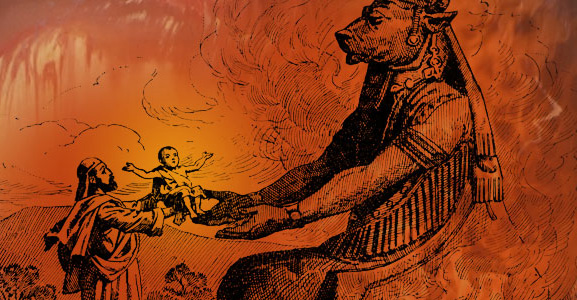
Abortion and child sacrifice are not new practices.  As long as people have been having sex, people have been making babies; and as long as people have been making babies, they have been sacrificing them for one reason or another.

I’ll never forget standing in the jungle at the top of a beautifully criss-crossed pattern of channels carefully carved into a stone hillside in Bolivia, South America.  There, in a bygone era, the blood of countless young virgins had run down into a macabre stone pool at the bottom of the hill, “sacred” sacrifices to their murderous gods.

Although evil, there is a certain understandable reasoning and even twisted nobility in the practice of child sacrifice for sacred purposes.  Horrific as these offerings were, the priests actually believed they were religiously efficacious, providing a divine covering for the community’s greater good—appeasing the gods and bringing blessing.

In his essay, “Myth Became Fact,” C. S. Lewis suggests such sacrifices form a kind of dim mythological “type” or garbled precursor to the one true blood sacrifice of our Lord and Savior, Jesus Christ.  Yes, it was a twisted and aberrant distortion of God’s redemptive plan, and yes, their hope and trust were horrendously misplaced, but in another way they were on the right track in affirming the need for propitiatory blood-letting.  And just as people sacrificed their children and their enemy’s children to appease their bloodthirsty gods, God sacrificed His only son, Jesus, so that those who do such things can be rightly redeemed of their bloodguilt.

What is especially tragic and disturbing about the contemporary practice of abortion is that any religious or redemptive motive is largely lost.  The satanic claim is still the same: “Sacrifice your child and all will be well,” but the rationale for doing so has been monstrously modified into an egotistical altar to the almighty self.  Today we do it for personal convenience, to avoid social shame, and to try and eliminate any serious consequences for irresponsible and immoral behavior.

But the demonic spirit of the age to whom we offer up our children is not a forgiving one.  All will not be well; not for the child, not for the self, and not for the society as a whole.  No community lasts long when its people selfishly choose to eradicate future generations for the sordid sake of their own perceived personal interests.

Granted, these are very hard words, especially if you’ve had an abortion or encouraged another to get one.  The great news is this: there is forgiveness and hope in Christ’s blood offering for sin.  He gave His life so that through His incomprehensible, unparalleled love anyone who has taken the life of another can be forgiven and restored to undeserved honor and joy.  This is the power of the cross.  Jesus’ once-for-all true child sacrifice appeases the wrath of God and gloriously redeems all who put their trust and hope in Him.

Whom shall I fear? Thoughts on Islamic Advance and Conquest

isis-flag

I am a naturally anxious person.  Like Martha in the Bible, I fret about so many things.  These days, I hear a lot of people fretting about the recent growth of militant Islam.  New alliances are being made, territories taken, whole political regimes fleeing before the sectarian onslaught and their myriads of minions ready to die for the God they call Allah.

For those who put their trust in the kings and kingdoms of this earth, it’s probably reasonable to fear recent political developments.  After all, some seventy odd years ago, the cry of “Deutchland über Alles” became the seemingly inexorable impetus to both kill and be killed.  While we must not forget that the actual reign of the thousand-year Third Reich lasted little more than ten years, they were, to be sure, ten bitter and horrendously difficult years.  Still, they hardly actualized the wild and boastful claims of Hitler’s Mein Kampf.

Unlike secularists, Christians do not put their hope and trust in the things and people of this earth because there are other more powerful and enduring forces at work in the world.  And while it’s theoretically possible for Muslims to politically rule all nations, Christians should not live in fear of what our lives and even deaths might become in such a scenario.  Our God remains greater than all our deepest fears.

Does this mean Christians will not suffer or face death for what they do and what they believe?  Of course not!  Christians have been martyred since the beginning of the church, and the book of Revelation makes it clear enough that the slaughter will continue until Christ finally returns to set all things right and make all things new.  Meanwhile, we wait and watch and pray, but we do not fear, for even in the darkest night and deepest valley our God is still with us (Psalm 23:4; Isaiah 41:10).

In saying this, I am not minimizing or making light of the deep tragedy that is the growing strength and brutality of ISIS or Boko Haram or Al-Quaeda or Al-Shabaab or the Taliban.  The demonic danger is real enough, and we have reason to be urgently concerned for the safety and welfare, not only of our Christian brothers and sisters, but for all human beings who stand in the path of a shamelessly wicked movement killing so ruthlessly in the name of God.  But the terror that might seize us must be tempered by a faith that fills us with the hope that our God is so much wiser and greater than the evil machinations of our modern age.  In the end, if we live, we live with Jesus.  If we suffer, we suffer with Jesus.  If we die, we go to be with Jesus.

And we fool ourselves if we think we understand the end from the beginning and how everything happening in our world today is finally going to be resolved.  As finite and sinful beings, we understand very little about the purposes and plans of a holy God who exists beyond dimensions of time and space.  Why fear when we know so little of the future and misunderstand or forget so much of the past?

Psalm 2:4 reminds us that God has been laughing at the pride of the godless since the beginning of time.  He will settle these times—as He has all other times—according to His higher wisdom and impeccable time-frame.  He always has been, He remains, and He always will be the one, the only, sovereign Lord of all.

Hell: That Hideous Hostel

hell_forever_and_ever

The Unbearable Doctrine of Hell
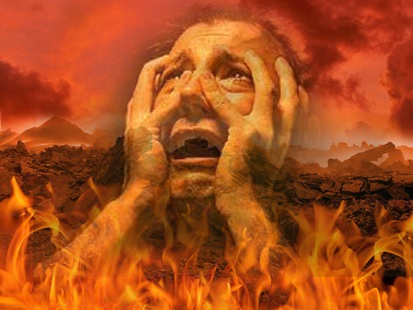
On page 282 of their Handbook of Christian Apologetics, Peter Kreeft and Ronald K. Tacelli state, “Of all the doctrines in Christianity, hell is probably the most difficult to defend, the most burdensome to believe and the first to be abandoned. The critic’s case against it seems very strong, and the believer’s duty to believe it seems unbearable.”

How can a good God allow people to suffer torment for all eternity? There are two basic ways to approach the unbearable doctrine of hell. We can argue for it based on the Bible’s authority and we can also argue for its rationality in light of some additional truths concerning God and humanity. I will seek to briefly do both.

The Bible on Hell
Biblically, the doctrine of hell’s reality is as clearly established as any central tenet of Christianity. Passages like Daniel 12:2, Matthew 25:46, and 2 Thessalonians 1:6-9 (look them up!) seem to clearly teach the reality of hell and eternal punishment for those who die without Christ. Perhaps, however, the more traditional and straightforward interpretations of the relevant scriptures are wrong. Perhaps the majority of theologians throughout the centuries somehow misunderstood what the scriptures were really trying to say about hell and eternal punishment. The passages, as one arguments goes, might be better understood to speak of temporally limited punishment, or perhaps the wholesale destruction—that is, annihilation—of the wicked after a finite period of time. A more recent view is that “love wins” and all—even the most hardened and vicious haters of God—will be saved in the end.

Without addressing all of the details of such claims, most, if not all, attempts at reinterpreting the relevant passages in question appear to be consummate failures. The force of the scriptural passages themselves, alongside the broad consensus of church history, seem to necessitate either a dangerous retreat into an accusation of biblical error, or a journey toward a better understanding of the reasons for such a (presumably) hideous doctrine as eternal punishment for all who reject Jesus.

Rejecting Hell on Other Grounds
Because of the biblical clarity on the issue of hell, nearly all who reject the doctrine do so not upon purely biblical grounds, but upon other considerations instead. What are these grounds?

First, personal experience initially suggests that the majority of people on planet earth are fairly moral people, at least as we see them from the outside. Thankfully, truly evil people appear to be exceptions to the rule rather than the norm. Thus, punishing the (seemingly) moral person for an eternity simply because he or she rejected Christ seems unjust in light of those who live morally disgraceful lives and then, like the criminal on the cross, receive Christ’s perfect forgiveness (and eternal life in heaven) just prior to death.

In addition, God’s love and mercy seem incompatible with notions like giving eternal punishments for finite sins and the inflicting of horrendous unending pain for no compelling reason.

What Are Human Beings and God Really Like?
To answer such concerns, let’s reflect first on the nature of humanity. For all our strengths and glories, we humans are not as good as we think we are. Our standards of goodness without reference to God’s biblical norms are almost always measured by our own corrupt and limited understandings of right and wrong. Our sinfulness and finitude skew and distort our ability to clearly judge moral matters as God does.

Unfortunately, most people—Christians included—see their sin and the sin others as far less serious and offensive than God does. And herein lies a great deal of the problem: We see God as far less holy than He really is, and we see ourselves and others as far more holy than we really are.

God, then, the holy, righteous, and just God, takes sin very seriously; so seriously that He sent Jesus Christ into the world to die in our place and take the penalty for sin. His word makes it clear that He will tolerate no imperfections (James 2:10; 1 Peter 1:14-19). A perfect justice requires that sin must be punished, but since we are all imperfect and have all fallen short of God’s righteous standard (Romans 3:23), we all deserve to be punished with death (Romans 6:23a).

This impossibly high standard of perfection levels the playing field when considering who deserves to go to heaven. In fact, no one does! That God saves anyone at all is an act of undeserved kindness on His part. Our offense to the idea that God would allow people to go to hell is better expressed as amazement that He would allow anyone to be with Him in heaven.

Why Is Jesus So Important?
And that is the critical reason why Jesus Christ is so centrally important in the discussion. He is the only one who was perfect and never did anything wrong (Hebrews 4:15). Thus, He is the only one who can take away sin and impart to us the perfection—His perfection—that God requires in order to get into heaven (2 Corinthians 5:21). We miss the point if we think that going to heaven has anything at all to do with what kind of moral life we lived upon this earth. It has nothing to do with that and everything to do with our relationship with Jesus Christ. God’s grace is expressed not in His being impressed with our moral lives. It is expressed in His being impressed by the righteousness of Jesus freely and undeservedly imparted to us, sinners saved only by God’s mercy (Ephesians 2:8-9).

God Has Made Us Free
Some other things can be said about hell at this point. Part of the image of God in human beings includes the freedom to love or reject Him. If this is the case, then there will be people who willingly choose to love and serve God. However, there will also be others who choose to love and serve something or someone other than God, which is, at its core, the sin of idolatry.

Some may ask, why not force everyone go to heaven? Then the dignity of an individual’s freedom is transgressed, and God’s call to live well would be a mockery, for there could be no losers or winners. All would end up in the same place, and all would have to love and serve God whether they chose to or not. And love that is not chosen is not love in any meaningful sense of the word.

As well, why should we assume that people who reject God would really want to be in heaven? If heaven is a place of eternal, praise, worship and service to the almighty God, why do we automatically think that everyone actually wants to go there? It would not be entirely unlike making me sit through Italian opera for all of eternity, or (similarly) making my wife sit through interminable football and basketball games. Even biblically, we see in Revelation 9:20-21 and 16:11 that out of their hatred for God, some people will refuse to repent no matter what He does to get their attention.

What Is the Nature of the Crime?
It could be argued that a sin committed in finite time should not be punished for an infinite time. But if sin is an offense to an eternally holy God, then that offense is an eternal one! The nature of a crime is not measured in terms of minutes but in terms of who was offended and the degree and nature of the offense. Murder may take less time than a robbery, but it is by its nature a more heinous crime. And killing a rat is less of an offense than killing a human being because the type of being matters in moral evaluations. If God is the ultimate being, then an offense against Him is an ultimate offense. How great is our need for Jesus!

We Should Be Moved to Action!
I think the inescapable fact remains that hell is a real threat and danger to all who do not know Christ. As Christians, we should not be embarrassed by or afraid of this reality. Rather, it should motivate us to sensitively but boldly tell all who will listen about Jesus’ unique and loving ability to forgive and rescue us from an eternity in hell and give us eternal life instead.

When Stuff Is Not Enough

Indoor Market

Not long ago, the Obama administration claimed that any long-term resolution to the problems in the Middle East must primarily address the social, political, and especially economic systems that give rise to fanaticism.  This is a step in the right direction, and certainly an advance from the ideology that says we should just “bomb them back to the stone age.”  But the problems being addressed and the solutions brought to bear upon them are only partly right.

There is a consistent short-sightedness in western secularism that struggles to understand why people would give their lives for anything other than essentially material gains.  This is hardly surprising given its basic assumption that virtually all human behavior is fundamentally reducible to political and material explanations.  After all, when all that exists is matter and energy in its various forms, why look for something beyond the physical to live for and find hope and happiness in?

For secularism, any claim to a religious or metaphysical motivation can only be a smokescreen for the real reason for human behavior, namely the craving for possessions, passion, and position.  In the contemporary vernacular, we call this the pursuit of money, sex, and power.

There’s no question radical Muslims are interested in obtaining such things for themselves.  But to reduce all rationales solely to the physical is to miss critical aspects of humanity that are very often much more important than merely material ones.  In short, stuff is not enough because social, political, and economic systems have distinctly religious and spiritual components that cannot and must not be passed over as incidental or unimportant.

Because secularists often ignore or badly underestimate these determinative factors, they tend to “thin out” and miss the deeper and more complex features of human life systems.  If you disallow spiritual explanations because you do not think the spiritual realm is real or important, you will have a hard time explaining why someone would give their lives for the greater glory of their God (or gods).  And you will not appreciate the deeply spiritual side of human nature.

In view of this, it is tragically ironic that in the current conflict, Islamic militants are very clear about their distinctly religious motivations.  And yet, these motivations are frequently ignored or reinterpreted in socioeconomic terms in an attempt to provide more plausible secularist explanations for how thousands of young men and women can be so readily convinced to give their lives for essentially non-material gains.  But in the minds of these Muslims, they are not terrorists.  They are faithful followers of Allah, offering up their lives in unsullied service of him.

Western secularism has a hard time understanding fanaticism in part because it does not see an ultimate non-material set of reasons for living and dying for anything or anyone beyond this life.  Consequently, very few in the secular west are genuinely fanatical about anything.  As long as we can maintain a reasonable level of personal peace and affluence we remain anesthetized to the greater things beyond this life.

If there is any counterpart at all in the west today, it is the proponents of the “new sexuality.”  They are not terrorists, of course, but they are fanatics and will stop at nothing until absolutely everyone—to the last man, woman, and child—is either convinced or cajoled into affirming that the LGTBQIA movement is not merely permissible, but morally right.  But moral rights are not material; they are transcendent.  They lay claim to you whether you agree with them or not.

Thus, to permit a perspective and set of activities is one thing.  To demand acceptance and celebration of them is wholly another.  Fanatics are not interested in plurality.  They are interested in conformity.  But they want conformity because they think they are right, not merely because it offers certain material and social advantages.  Similarly, in Islam, the resolution to any moral question is clearly a religious and ideological one that cannot be settled by or reduced to purely pragmatic and material concerns.

G. K. Chesterton puts it best in The Everlasting Man when he states that secular socialists are “always stubbornly and stupidly repeating that men fight for material ends, without reflecting for a moment that the material ends are hardly ever material to the men who fight.” He goes on to astutely observe, “There is a religious war when two worlds meet; that is when two visions of the world meet; or in more modern language when two moral atmospheres meet. What is the one man’s breath is the other man’s poison. . . .”  Which is poison and which is breath and why?  The ultimate answer is not determined in a laboratory, through political showmanship, or even in the marketplace.  No, the solution that we seek must be sought and found elsewhere.

Yes, we live in a world at war, but contrary to secularist views, the enemies we engage are not merely material.  Ephesians 6:10-20 reminds us that our struggle with evil is not against flesh and blood.  It is, at its root, a spiritual battle.  The sooner we understand and embrace this, the better equipped we will be to face our real enemies with clarity, resolve, and effectiveness, using weapons that are not of this world but instead are divinely powerful for the destruction of godless fortresses and false ideologies—our own included.