Author Archives: lewinkler

Unknown's avatar

About lewinkler

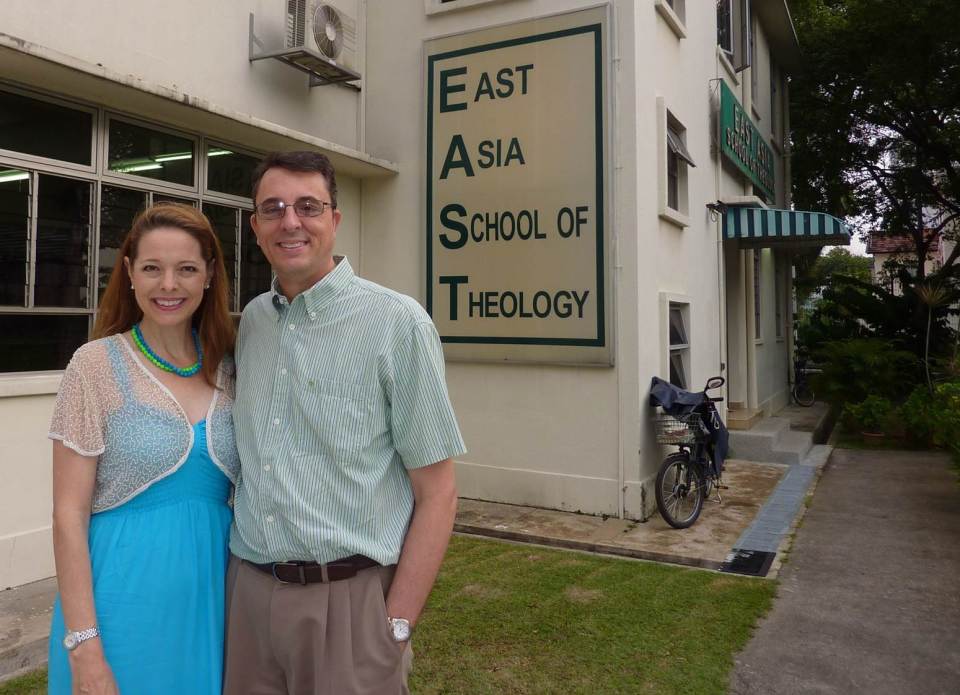
I am a professor of theology and ethics at the East Asia School of Theology in Singapore.

The Reconciling Power of the Gospel

img_0127

Glancing around my theology class, I was struck by the mix of cultures present in the room.  Outside of the fact that I am from the USA, students hail from places like East Asia, India, Korea, Japan, the Philippines, Vietnam, Indonesia, Myanmar (Burma), Suriname, and Singapore.

There is more significance to this list than might be appreciated at first glance.

Not only do the USA and Japan have a contentious past, Asian nations also have a long and bitter history of conflict and war with each other.  During World War II, for example, the Japanese not only bombed pearl harbor, they conquered the Philippines, Korea, as well as much of China and Southeast Asia.  As they advanced, they brutally killed and imprisoned many of the inhabitants.  Those allowed to live were sometimes raped, beaten, and treated like slaves and animals.

I mention this not to shame the Japanese.  All sides committed great atrocities against one another.  And Americans should not forget the countless innocent civilians indiscriminately killed in Japan when atomic warheads were dropped on two of their major cities.  I only share these examples to illustrate how deep the hatred and animosities still run between these countries up until the present.  For many, the pain and anger are still very fresh and very personal.

I also mention this to show the transforming power of the gospel.  Here at our seminary, these students are all sitting together peacefully, worshiping God, loving each other, praying, learning, and sharing together as devoted brothers and sisters in Christ.  In view of human history, only God could orchestrate this kind of unlikely fellowship of saints.

This is the radically profound power of the gospel.  It takes all the wrongs and atrocities of the past, all the shame, anger, bitterness, unforgiveness, and searing loss, and brings it to the cross.  Here in Christ alone, the nations of the world find genuine healing and permanent reconciliation with God and one another.  It’s one more reason I am not ashamed of the gospel because it truly is the reconciling power of God for the salvation of everyone who believes, whether they were previously fast friends or even mortal enemies.

Why I Blog

10401956_754991017955807_3513041193206306806_n

People blog for a wide variety of motivations.  And as a result, the blogosphere has taken on a dizzying array of purposes and products.  Some blog because they want to chronicle their lives and the lives of those around them.  Some blog to share insights and ideas about politics and the surrounding culture.  Some blog because they want to be heard.  Some blog because they want to be famous.  Some blog because they think they have something to say and so others may as well have the chance to hear it.  Still others blog because they have too much time on their hands and don’t know what else to do with their lives.  Blogging is a popular pastime and they might as well jump on the bandwagon and join the fray.

For most, it is probably a complex and varied combination of all these reasons and more.

But in thinking over the question, it strikes me, it might be a good idea to ask myself, “Why do I actually blog?”

Here’s a first pass at an answer:

First and foremost, I blog because I am a writer.  But I do not write to be published, to become famous, or even to have something to post on my blog.  I write because I have to, because it is a calling.  Something—or perhaps it’s better to say Someone—deep within compels me to write.

Whereas some use conversation, others use silent reflection, and still others use art and music to clarify their thoughts, most of the time, I use writing.  It helps me process and understand what I’m thinking and feeling about God, His word, His world, myself, and others.  It’s also an opportunity to play around with words.  While others like to play Pokemon Go©, with their friends, their guitar, or their voice, I like to play with words.  Believe it or not, it’s almost a form of entertainment, bringing genuine joy and a profound sense of satisfaction.

I also blog because it makes public what was once only private.  There is a hope that the things written would be used by God to offer help, encouragement, and insight for those who want and need it.  Ultimately, and above all else, I blog as an offering to God, that He might somehow be honored and glorified.

What’s the worst that can happen?

what-s-the-worst-that-can-happen

There is, as I write, a bill in the California state legislature authored by openly gay legislator Ricardo Lara, that will require (among other things) that all Christian universities in California to allow same-sex married couples to not only attend, but also live in married student housing.  Failure to do so would open the schools to discrimination lawsuits and the loss of millions of dollars in public funds.  Many think this type of legislation is only the beginning of a tsunami of cultural changes coming to the American landscape in the next few years.

It’s honestly hard to say where this particular legislation will go from here—into law or into the trash.  If, however, the example and trajectory of Canada on these matters is any indication, it’s likely that at least some legislatively punitive measures will eventually be brought against Christian schools, organizations, churches, and even individuals who refuse to accept homosexuality as a morally commendable lifestyle.

Although we were never truly a Christian nation, from the perspective of history, Christianity in America has enjoyed unprecedented favor and cultural influence for significant portions of her history.  Perhaps that time has passed.  It’s hard to say for sure.  Regardless, it is likely American society will, for quite some time, continue to enjoy the Christian moral capital it has previously been infused with, but as history shows time and time again, God’s moral patience will not last forever.

I pray public legislative censure against Christianity for refusing to endorse homosexual behavior will never come to pass in America, but there are worse things that can happen to Christian schools, organizations, churches, and individuals than losing social acceptance and state and federal funds.  And there are even worse things that can happen than being shut down, incarcerated, and killed.

The worst thing that can happen for Christians is to forsake their Lord and compromise their calling just to retain some tattered vestige of public praise and cultural power.  Christianity’s power does not come from the accolades of societal approval and respect from those who don’t love God.  It’s a power that at its weakest is stronger than the strength of men, and it comes only from being faithful to Jesus Christ, no matter what the cost.  To know the supernatural power of His resurrection, we must be willing to suffer humiliation and shame.  We must be willing to die with Christ.  There is no other way.

What is Christian authenticity?

becoming-an-authentic-christian_t

There’s a lot of talk these days about authenticity.  The youth of this generation want authentic leaders and authentic relationships with one another.  I understand this.  No one wants to befriend a phony.  No one wants to follow a stuffed shirt.

But what does it mean to be “real,” and “authentic?”  This question cuts to the heart of the debate raging in mainstream America today about personal identity and gender concerns.  If being authentic means little more than following the deep desires of your inner being, then those with strong feelings and inclinations towards those of the same sex (for example) should freely pursue these inclinations in order to be true to their inner selves.  Failure to do so means you are inauthentic, a poser, a fake, and a fraud.

The problem with this perspective is that it fails to appreciate the sin nature that infects every aspect of our being.  To put it bluntly, whether we admit it or not, we are, apart from Christ, authentic sinners.  This is a humbling truth to accept and not easy for anyone looking to affirm and take pride in who they really are.  While we were not created to be sinners, sinners are what we became when Adam and Eve willingly turned their backs on God.  Ever since, we have been tainted, marred, confused, and deceived about who we really are and who we’re meant to become.

As sinners, apart from Jesus, to be “authentic” to oneself becomes an invitation—even an imperative—to embrace the sinful self and forsake the divine design for which we were created, namely, to obey and serve our Maker in humble gratitude.

There is, however, a far more reliable and enduring source that defines who we’re really meant to be.  We were created to be conformed to the image of Jesus Christ.  Our authentic selves are not found within us at all.  They are found in a right relationship with our Creator made known through Jesus Christ and empowered by His Holy Spirit.

God alone can tell us who we were meant to be, providing Jesus as the example and the explainer of authentic humanity.  He also gives us His Holy Spirit who supplies the guidance and transforming power so that we might become the kind of human beings God created us to be.

This provides a much clearer and more reliable picture of what an authenticity actually looks like.  The genuine person knows and experiences certain realities and possesses certain character traits that can only be supplied from outside the self.  God alone can be the source of authentic human life.

The authentic person, then, knows that all of creation exists and is sustained by a wise and loving God who made it and maintains it for His pleasure and glory.  They humbly acknowledge that moment by moment their very life and breath are a gift from Him, that they are undeservedly loved and forgiven by Him through Jesus Christ.  They spend time seeking to understand and praise and thank this amazing Creator God for who He is and what He has done, is doing, and will do.

The authentic person also understands that to lead is to follow—to serve, sacrifice, and give oneself away.  They know they can only love because God first loved them, that their joy, peace, patience, kindness, faithfulness, gentleness, and (ironically) self-control all come from being Spirit-led and Spirit-controlled.

They understand that true security and significance come not ultimately through personal achievement or acquiring increasing amounts of material wealth and recognition, but solely through a right relationship with God.

The Christian vision of authenticity is so radically strange and foreign to what seems normal and authentic to sinners, it can only seem unnatural and inauthentic to those who have no interest in honoring their Creator.  As Romans 1 points out, by refusing to glorify God, they suppress the truth and exchange authentic personhood for a lie.

Thankfully, Christians do not have to fall into the cultural trap of confusing sin with authenticity.  We are made to be someone far greater than natural selves.  We are called to pursue God and let Him conform us to His intended vision of who we were truly meant to be.  In Ephesians 4:24, Paul puts it this way: “Put on the new self, created after the likeness of God in true righteousness and holiness.”

As divine image-bearers, to be authentic, then, is to be righteous and holy—to be like God.  But notice this: It is an arduous and active process and not easily attained.  It runs hard against the grain of our post-fall natural tendencies and sinful desires.  We must, with God’s help, relentlessly, energetically, and purposefully forsake and sublimate what comes naturally to our former selves.  We must embrace a radically new vision of who He calls us to be and strive with all the power He supplies to become the truly authentic person He created us to be.

In contemporary American life, this is a thoroughly counter-cultural stance.  Suggesting that some of our most deeply-seated personal desires are directly opposed to our own well-being as well as the greater good of society will not necessarily make us popular or respected.  In fact, it may even lead to being persecuted outcasts and vilified enemies of the state.  But as Jesus reminded us in Matthew 5:10-12, “Blessed are those who are persecuted for righteousness’ sake, for theirs is the kingdom of heaven.  Blessed are you when people insult you, persecute you and falsely say all kinds of evil against you because of me.  Rejoice and be glad, because great is your reward in heaven.”

Authenticity, Immorality, and Homosexuality: How do I find my “true self”?

Be Authentic Concept

On May 31st, Trey Pearson, the lead singer of the Christian band, “Everyday Sunday” wrote an open letter to his fans explaining that he was gay and was coming out of the closet.  Married for seven and a half years and the father of two children, this coming out included divorcing his wife.  He claims the vast majority of people, his ex-wife included, have been extremely supportive and encouraging.

I suspect if Trey had openly confessed to his fans he was divorcing his wife because he was having an affair with another woman, their response would have been quite different.

Many Americans find heterosexual unfaithfulness in marriage far more offensive than when a homosexual who has been married to someone of the opposite sex “comes out of the closet” and professes his or her “true sexual identity.”  When they leave their spouse behind for another partner of the same sex, they are considered “courageous” and “authentic.”  The heterosexual offender, in contrast, is deemed “immoral” and “unfaithful.”

This is due to a number of factors, but the link to the idea of “authenticity” stands in a direct-line relationship.  Being “authentic” and faithful to oneself is considered far more important than being covenantally and sacrificially faithful to another.  And what is truly “authentic” is based almost entirely on the internal longings and desires of the individual self.

That we might refer to sacred norms and traditions, that there is an externally designed human purpose and goal, are given little serious consideration, if not overtly ridiculed and mocked.  The idea that there is an ideal human nature that exists apart from—and often stands in evaluative judgment of—the choosing “I,” seems ridiculous and strange to the postmodern thinker who believes that no one and nothing outside of the self can tell a person who they truly are.

Only under this kind of radically emotional and personalist ideology of “authenticity” can someone be publicly praised for using homosexuality as an excuse to forsake a heterosexual marriage vow in order to have sexual relations with someone of the same sex.

But all of this can be set aside for a moment to address what I believe is a deeper danger and greater tragedy.  Because homosexual practice goes against God’s perfect design plan for human flourishing and personal as well as social well-being, it ultimately damages the commonwealth of society and hinders personal connection with a holy God, leading to all kinds of deleterious repercussions and predicaments.  It becomes yet another source of dissatisfaction and ungodliness, just one more form of refusal and lack of desire to be like God on His terms.  As in Genesis 3, we want to “be like God” but only selfishly and in the crudest and most demonic sense of that term.  Thus, homosexuality is not the problem but merely another symptom of the more fundamental problem of being alienated and disconnected with the one true and holy God.

In this sense, when I see the way homosexuals wrestle with their sexuality and inner desires, I see a mirror of myself.  I see my own struggles to be sexually pure, to understand my own true identity, to understand what it means to be a godly man and a male in a world of emotional immaturity, moral cowardice, and sexual confusion.  And if the goal is merely emotional authenticity, then I see the authentic sinner standing at the base of every man, woman, and child who will not yield to the Lordship of Jesus Christ.

In short, homosexuality is symptomatic rather than paradigmatic.  It’s just one more illegitimate way (among many) to try and fulfill a normal desire (sexual pleasure) and need (procreation and relational intimacy) that is, at its root, no different than the alcoholic who tries to meet a normal desire (feeling good) and need (satisfaction of thirst) by drinking too much and too often.  The illegitimacy of the means to try and fulfill such desires and needs ironically results in the distortion and lack of fulfillment, thus making sense of the studies showing homosexuals—especially men—almost always have inordinately higher numbers of sexual partners than their heterosexual counterparts.  The need remains as intense as ever but the wrong way of meeting it only extends and exacerbates the problem of unfulfilled desire.

In the end, they seek but do not find.  They knock on doors where nothing and no one stands behind to open and answer.  Thus, one of the great tragedies of our age lies within the catastrophic canard that tells the homosexual that all that stands between him or her and authentic fulfillment is social acceptance and full freedom to seek satiation.  The terrible truth is they are being given an open and celebrated invitation into greater frustration and deeper bondage.  I genuinely grieve for homosexuals who look for fulfillment in all the wrong places by all the wrong means, because this is what sin loves to do—damage and destroy those who embrace and pursue it.

In a recent speech, Mars Hill Audio Journal founder Ken Myers puts the idea this way: “We are all creatures made in the image of a Triune God, called to fellowship with him, to love for one another, and for stewardship of our earthly home.  Our hearts are restless until we rest in him.  These are not religious opinions, but faithful descriptions of what is really the case.  We are in fact this sort of creature, and our shared public life should honor this sort of fact, not just those facts measurable through material means.”

The good news is you can discover your true self.  There is a source of authentic humanity, but it comes from outside the self and even outside the universe.  It also has a name: the God-man, Jesus Christ.  If you want to find out who you really are, only the One who made you can tell you, and only He can make you who you ought to be: a truly authentic and genuinely godly human being.

I will say more about this counter-cultural and counter-intuitive authenticity in my next post on Christian authenticity.

Why are we returning to Singapore?

Picture1

In my last couple of posts, I might have given the impression that the primary feeling I am experiencing when I think about returning to Singapore is grief, but that would not be entirely accurate.  My emotions on this issue are multilayered and range from sadness to excitement.

Lately, as the time of return draws near, the sense of excitement is growing and makes me want to say more about the reasons for it.  I already mentioned in a previous post that God has clearly called us and we want to obey Him, but there are some very practical and strategic reasons as well.

First, after living eight years in Singapore, we have lots of valuable experience and will have fewer cultural adjustments when we return.  We’ve already been through a lot of the bumps and bruises that come with learning to live well in a foreign country and will likely have an easier transition back.

Second, what we at EAST do is meeting one of the primary needs of the church in Asia, namely the intentional development of biblically-minded, godly, indigenous servant leaders.  Christianity is exploding in Asia, but without adequate training and discipleship, immature leadership can create all kind of problems for the long-term health and impact of the church.  We help provide the firm foundation upon which church leaders can build and grow.

Third, this need for leaders is so great, Asians are seeking further training in droves, but they often do so in seminaries far removed from their Asian roots.  They attend schools in Europe and North America that sometimes confuse and squelch their spiritual passion, or lure them away from Asia with prospects for ministry in places where there is already a surplus of qualified and effective Christian leaders.  Such opportunities draw many gifted leaders away from returning to Asia where they are needed the most.  For those who do return, they sometimes bring unbiblical teachings and contextually insensitive methodologies that can cause further conflict and confusion in Asian church communities.  By training Asian leaders in Asia, we keep them engaged in their local ministries and help them return to the needy mission fields where they are needed most and can be highly effective.

Fourth, and closely related, I am reminded of the quote: “Do not do what others can and will do.  Rather, do what others cannot or will not do.”  The fact is, America is abundantly supplied with qualified, gifted, and godly seminary professors, so much so, that many cannot even find teaching jobs in their field.  In contrast, seminaries in Asia like EAST are sorely understaffed and pleading for qualified teachers to come and meet the growing need for advanced Christian leadership development.  Barbara and I are uniquely called and suited to help meet this growing need in Asia.

Finally, and most importantly, I think of the godly and amazing students we’ve had the privilege of teaching and mentoring at the EAST.

I think of Tunji, a humble pastor from Nigeria, who came to EAST after miraculously surviving a Muslim riot that took the lives of some of his congregation.  He is now a leader of leaders, developing pastors in the sometimes dangerous and spiritually challenging countries of northeastern Africa.

There’s Jackie and Cindy, Singaporeans faithfully working among a spiritually resistant and unreached Muslim people group in East Asia.  There’s Moses, a Korean, who is reaching out to North Korean refugees in both South Korea and East Asia.  Bataa, a Mongolian, is now the country director for a growing Christian ministry in his home country, and Singaporean Bessie is regularly teaching courses on spiritual warfare in East Asia, a subject where biblically sound and practical information is desperately needed.

I also think of Shirley who came from East Asia to our school as a relatively young Christian.  Through the process of her time at EAST, she significantly matured in her faith and discerned God was calling her to minister as a missionary in Cambodia where she currently serves and regularly helps coordinate ministry internships for EAST students.

Honestly, the list could go on and on.  There are many more graduates I cannot mention due to security concerns and space limitations, but the privilege of working with high-level faithful Christian leaders like these is one of the most humbling and exciting aspects of what we do at EAST.  And I would not trade the chance for anything.

Why are we returning to Singapore?  We are called, equipped, needed, willing, and privileged to be a part of what God is doing there at such a time as this.

Home Forevermore

hqdefault (1)

I said goodbye yesterday to some friends we met on sabbatical.  Sometimes it feels like my life is one continuous goodbye.  Of course there are constants for which I am profoundly grateful.  God is always with me and Barbara has been my ever-faithful life companion through these past 26 years of marriage, but in some seasons of life, the goodbyes seem to engulf the greetings.  As we prepare for our return to Singapore, it feels like this is one of those seasons.

We are saying goodbye to our children, a new son and daughter-in-law, extended family, friends old and new, and so much more.  Of course, new beginnings bring new hellos and new opportunities, but the pain of saying goodbye is still very real and takes time to work through and move beyond.  If I’m honest, there is sadness in excitement and sorrow in anticipation.

In reflecting on these feelings, part of the longing to never again have to say goodbye is rooted in the great hope of heaven where we will finally find ourselves face-to-face with God and join in the sweet communion of the saints in a way we have never known before.  It will never be goodbye again.  It will only be an exultant, spectacular, and unending reunion.

I am reminded of the words from an old Degarmo and Key song:

“It’s gonna be a family reunion when we see the Lord

At the family reunion we’ll be home forevermore . . . home forevermore”

Whenever God calls, I’m ready to be home forevermore and never have to say goodbye again.

Do I love Singapore?

i_love_singapore_do_rags-r3328ea3d6e1046788ea37262c99dd23d_z21f3_324

When we tell people we are returning to Singapore, they often respond by saying, “You must love it there!”  Well, yes and no.  I love many things about Singapore, but there are also many things I don’t.

I don’t love the pace of life and the crowds of the city.  I love wide open spaces and wild places.  I don’t love the year-round humidity and heat of the tropics.  I love the seasons; the beauty of changing leaves in fall, the crispness of snow in winter, and the bursting forth of new life in spring.  I don’t love the challenges of living as a foreigner in a foreign land, far from friends and family, constantly struggling with the feeling of being displaced and unsettled.  I love being close to long-time friends and family, rooted and grounded in one place without the fear and frustration of having to uproot and move again and again.

On the other hand, I love living in a clean, safe city where everything works and there is minimal corruption.  I love being a part of what God is doing in Asia.  I love watching the church there grow exponentially and see churches catch a vision to take the gospel to the world.  I love being part of the ministry of the East Asia School of Theology, training current and future world Christian leaders.  I love hearing the incredible stories of God’s faithfulness in the students’ lives and all the wonderful ways He has used and is using them for His glory.

During our assignment back in the US, I wrestled hard with these somewhat polarizing loves, especially as the wait to return became extended.  Was I waiting for some other call?  Was I hoping for a new (and presumably easier) assignment?

I think if I am honest, although I never sent out any resumes and made no inquiries, I secretly hoped God would put it on someone’s heart to offer me a teaching position somewhere—anywhere—in the US.  But the offer never came.  There was not even a hint or possibility raised by anyone.  The heavens and earth were both deafeningly silent with regard to this hidden desire to stay and enjoy all the loves I associated with American life.

In the end it was very, very clear—not as a matter of default, but as a matter of divine calling—that God wanted me back in Singapore.  And with that calling came a renewed sense of excitement for all the things He wanted to do in and through me there.

Do I love Singapore or the USA?  Well, much more than either, and above all else, I love God and want to obey and follow Him, wherever He leads.  Right here and right now, that means continuing to serve and seek Him in Singapore—and anywhere else He might take me on this marvelous journey of faith.

Get Ready for the Ride of Your Life

{1001d259-1cae-4e34-b628-f1c1f1cf6be4}.http--www.blacktomato.co.uk-wp-content-uploads-2009-03-shauns-peru

A Walk to Remember

I recently returned to the town where I grew up and walked through a favorite childhood hangout called Spring Rock Park.  There I sledded in winter, spent hours with my buddies, and played lots of games of Little League baseball.  Walking past the old diamonds, I observed the signboards with the names of recent members of championship little league teams.  I noticed several familiar last names: Feeney, Dixon, McNamara and more.  Were they actually the sons of my old grade-school friends?  It’s hard to say, but it was not inconceivable that “Winkler” might have been posted on those Little League rosters had it not been for the very abrupt and rather inconvenient intersection of God’s amazing plan that so thoroughly interfered with my life plans in college.

I Never Longed to See the World

Growing up, I never really wanted to leave my hometown.  I loved it, and always expected to get married, raise a family, grow old, and die there.  Unlike many others, I never longed to “see the world” or dreamed about visiting exotic places.  I did not even own a passport until forced to get one at the age of 22 when God called me overseas for the first time to spend a summer sharing my faith in Budapest, Hungary.

In for the Ride of My Life

That’s when God decided to change my very small plan for a much bigger one.  I had no idea I was in for the ride of my life—and what ride it has been!  I’ve been behind the iron curtain to share my faith before it fell.  I’ve taught in Trinidad and walked the streets of Vienna and Salzburg, seen Hitler’s eagle’s nest and Mussolini’s profile in the German Alps.

Together, my wife and I have been to what was then the highest airport in the world as well as to the Amazon jungle in Bolivia, South America and eaten wild armadillo.  (It tastes like chicken, by the way.)  We have walked upon the place where the Incas offered up virgins to appease their demonic bloodthirsty gods, claiming that tragic place for Jesus Christ, quoting the scriptures in a rebuke to their pagan and godless ways.  We have ridden elephants in Thailand, stood upon the Great Wall of China, explored the jungles of Borneo and seen real skulls of tribal people who were killed in headhunting raids but later embraced the gospel of Christ and were radically transformed.

And besides our regular teaching and training ministry in Singapore, we have ministered in Manila, developed leaders in Mongolia and Korea, seen the Holy Land, taught in Turkey and toured the seven churches in the book of Revelation, performed a wedding, then preached and taught in Myanmar (Burma), as well as in Thailand, India, and several other places I can’t name.

Looking back now, I shudder to think what I might have missed because I erroneously thought I had bigger plans for my life than God, plans to do nothing more than live, grow old, and die in the same small town.  As much as I wanted it, that simply wasn’t His plan for my life.

The Christian life is not boring!

People sometimes think being a Christian is boring.  They claim there are too many life experiences that are “off limits” if they decide to follow Jesus.  But they are dead wrong.  Nothing is more dangerous, more breathtaking, and more exciting than walking closely with the Lord—even when doing so means you spend your entire life in the same small town.  As long as God calls you to do it, then He has you on a grand adventure of faith where every day brings a new opportunity to discover more about Him and tell others around you about the untold wonders of His indescribable love.  If you are willing to follow Him without reservation, no matter where He takes—or keeps—you, then get ready for the ride of your life.

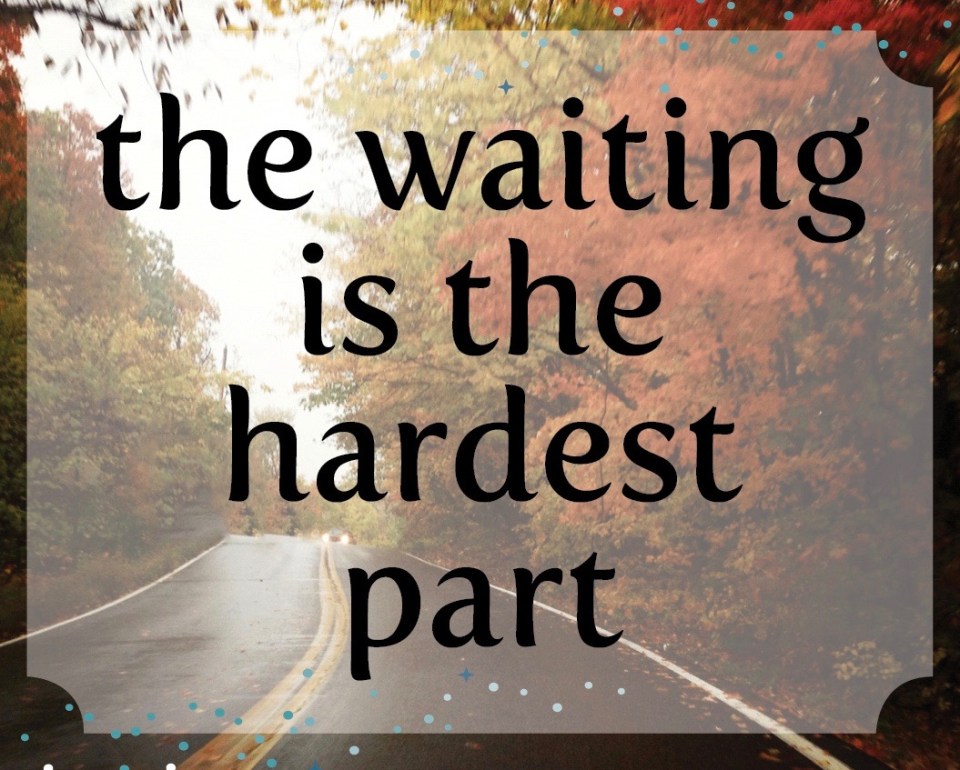
The Waiting Is the Hardest Part

The-Waiting

I don’t like waiting.  I hate long lines, slow walkers, protracted plane flights.  I am, by nature, not a patient man.  Not that I don’t want patience.  Far from it!  I want patience and I want it now!  I want to be kind and loving now.  I want to be godly now!

It does not help that we live in a microwave world that expects everything to be done in five minutes or less.  The idea that God is in no hurry to bring about His purposes and plans seems almost offensive to our impatient and instantaneous-minded society.

But God is not in any discernible rush to finish His plans for our lives.  He unfolds a timetable that is often very different from our own.  After all, He is in the business of serious soul-making, cavernous character creation, and radical restoration.  And He has all the time in the world to make that happen.

In the meantime, we think everything we deem important should have been finished years and years ago.  We are impatient, demanding, and proud.  God cares enough about that to make our lives arduous, plodding, and humiliating.

When we left Singapore over a year and a half ago, I never dreamed it would be such a protracted journey back to the things that I love, the teaching and mentoring of current and future leaders of the church in Asia.  Yes, I wanted and needed a break, but I also wanted to get back to Singapore on my own timetable.  And I wanted the interim period to be restful and easy.  Instead, God had some serious things He needed to teach me about my lack of character, my laziness of heart, my love affair with anxiety, and my failings as a husband and father—just to name a few.  He also needed to impress into me a renewed willingness to set aside my agenda and let Him have the first and final say over my life, day after day, moment by moment.

God often does this most effectively by making us wait.  When Isaiah tells the people of Jerusalem to “wait” in Isaiah 40:31, he does not tell them to wait for their circumstances to change.  He does not tell them to wait for the perfect opportunity to arise.  He does not tell them to wait on some other god, thing, or person.  He specifically calls them to wait on the Lord.  He alone is the sole source of strength and hope.  But waiting implies the need for patience and assumes what we want of Him will not appear in an instant.  It takes time.  We will be given strength and hope, but only when God thinks the time is right and only in the way He decides.  Meanwhile, we are simply called to wait.

I would be dishonest to say this has been easy for me.  To the contrary, the waiting has been very, very hard.  I am reminded of the immortal words of that great musician and accidental pop theologian, Tom Petty.  Sometimes, “the waiting is the hardest part.”  But as hard as it is, waiting on the Lord is an integral part of learning to love and trust Him.  And in the end, the wait is always worth it.

David puts it best in Psalm 27:14 when he cries out in the congregation, “Wait for the Lord; Be strong and let your heart take courage; Yes, wait for the Lord.”