Author Archives: lewinkler

Unknown's avatar

About lewinkler

I am a professor of theology and ethics at the East Asia School of Theology in Singapore.

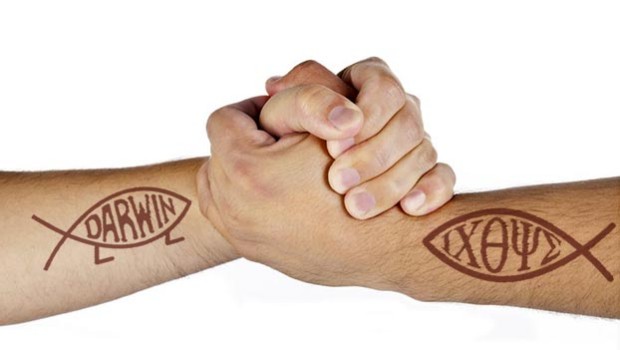
The Evolution versus Creation Debate

Image

How valid are the claims of Darwin?  What proof is there for his ideas and the more recent scientific conceptions of his theories, now called, “neo-Darwinism”?  Is evolution really “A Theory in Crisis” to quote the title of non-Christian scientist Michael Denton’s book?

Since many sincere Christians believe in evolution without throwing away their need for a creator in the process, I want to clarify right away that in talking about evolution and creation, I am referring to two very different perspectives.  By “evolution,” I mean atheistic or non‑supernatural evolution which, at its root, denies the possibility of God being involved in the process in any way.  When I speak of “creation,” I am referring to the need for a Creator, a divine being.  In addition, for clarity and brevity’s sake, I will put aside the “young earth/old earth” debate.

What, then, is the evidence for evolution versus creation?  To begin with, one of the really difficult unsolved problems in evolution is the question of how living organic organisms evolved from non-living inorganic compounds and processes without the aid of any intelligent design or direction.  The scientific search for a purely natural mechanism to bring life from non-life has been consistently fruitless.  In Michael Behe’s Darwin’s Black Box, Behe points out that the chance that even a single cell could evolve without outside direction from an intelligent source is a mathematical impossibility.  The search for a non-directed mechanism is certainly not dead among scientists, but it is taking on new and increasingly desperate twists.

Panspermia: The Outer-space Connection

It is no surprise, then, that some high-level scientists are seriously entertaining a theory of what is now called, “panspermia.”  In light of the formidable difficulties of life arising from non-life on planet earth without the help of an intelligent designer, some theorize that life here was initially brought (either accidentally or intentionally) from outer space.  Perhaps, it is thought, the seed of all life here was planted by a meteor, or even by other intelligent alien life forms.

As potentially ridiculous as this sounds, it is now a viable theory to many atheistic scientists trying desperately to escape the clutches of the real theoretical problems evolutionary theory cannot adequately solve.  But panspermia solves nothing, for it retreats into the unassailable fortress of agnosticism by suggesting that since life came from some other place in the universe, there is no way to confirm or falsify the theory, knowing that there is (so far) no viable way to find or travel to these places and test the theory.

Where did everything come from in the first place?

But even if we accept—just for the sake of argument—that life originally did come from some place other than planet earth, does evolutionary theory offer an adequate explanation for the origin of the basic raw materials of the universe as a whole?  It does not, because it must assume the eternality of matter to do so.  But this is an assertion that science itself, through the discovery of laws like the conservation of matter and the second law of thermodynamics, has shown to be extremely unlikely, if not impossible.

For Christianity, of course, none of this is a problem.  We recognize the need for an eternal, intelligent and powerful designer of creation, especially since this is precisely what the Bible teaches (Genesis 1:1).  As well, the fact that God created living things with the capacity to adapt and change in response to environmental fluctuations is obvious.  This is what biologists call, “microevolution,” “speciation,” or “adaptation.”  But there are inherent natural limits to this sort of biological change, refuting the notion of “macroevolution” where one type of animal (say, an amphibian) somehow becomes another type of animal (say, a reptile).

Punctuated Equilibrium and the “Hopeful Monster”

This failure to demonstrate the possibility of macroevolution has led some scientists to propose a theory of “punctuated equilibrium.”  This theory claims that genetic changes remain externally unexpressed until at some “critical mass” point, the genetic traits are very suddenly and completely expressed in a whole new type of creature or anatomical feature.  Thus, an amphibious newt suddenly gives birth to a fully formed and functional reptilian lizard.  Most scientists try to steer clear of such “hopeful monster” theories, but the theory is really just an honest and desperate attempt to encapsulate what is required from the evidence of the fossil record.  What do I mean?

The Problem of the Fossil Record

The fossil record clearly points away from Darwinian theories of gradual trans-typical change.  That is, new types of animals essentially “appear out of nowhere,” remain morphologically stable for a while, and then “pop” back out of existence.  And the same is true for so-called, “living fossils,” like the coelacanth, and the tuatara.  These are living animals that suddenly and completely “disappeared” from the fossil record and then mysteriously showed up in modern times, virtually unchanged.

If Darwin were right, we would expect to see more transitional forms in the fossil record, which we do not.  In addition, virtually all examples of “demonstrated” transitions (like horse and human evolution) are highly debatable in the first place, and have been subjected to intense (and warranted) critical analysis and refutation.

One Fatal Flaw

All of this points to one fatal flaw in atheistic evolutionary theory, the unspoken assumption that life in all of its astounding complexity and beauty must have arisen from solely natural processes.  However, after more than a century of searching for the mechanisms of evolution, one consistent theme emerges: the universe (and life on planet earth in particular) was created and designed by a magnificently powerful and intelligent agent.

Indeed, God has not left Himself without a witness in the world that He has made.  As Romans 1:20-22 states: “For since the creation of the world His invisible attributes, His eternal power and divine nature, have been clearly seen, being understood through what has been made, so that they are without excuse, for even though they knew God, they did not honor Him as God, or give thanks: but they became futile in their speculations, and their foolish heart was darkened.  Professing to be wise, they became fools.”

It is clear that, “The heavens are telling of the glory of God; and their expanse is declaring the work of His hands” (Psalm 19:1).  May we be wise and not foolish, by honoring and giving thanks to “the God who made the world and all things in it.  For in Him we live and move and exist” (Acts 17:24, 28).

Mind over Matter or Matter over Mind?

Image

I love playing basketball.  But at forty-nine and counting, I am not sure how much time I have left on the court.  Over the years, I have certainly changed the way I play the game, especially more recently.  I shoot more, run less, almost never drive to the basket, and defend with much more reserve.  I also know that one wrong step, one unforeseen collision, one ill-advised twist or turn, could blow out a knee, rip a tendon, or shred what little cartilage I have left in my joints.

But even if I were able to remain relatively injury-free over the next few months and years, the end will someday come, be it three years, five years—dare I hope for ten?  Eventually, I will succumb because everyone succumbs.  The monster becomes the midget, the fast the feeble, the dominant the dominated.  My father somehow played basketball into his early sixties.  His pastor, who played with him, called him a “freak of nature.”  But even my dad had to call it quits—although it took the need for a knee replacement to make him hang up his high tops for good.

Growing up I was sometimes told I could pit “mind over matter” and challenge the limits of my physical abilities.  To be fair, it was intended to prevent me from making excuses that I couldn’t do something because it was “too hard.”  But at the same time, age has had a way of changing the rules regarding certain things.  As time passes, I would like to think I’m learning some important lessons in humility, and one of them is the fact that sometimes matter wins over mind.  As much as I want to, I simply cannot do everything my mind desires and tells my body to do anymore.

When Psalm 90 reminds us to “number our days” it is for a very good reason—so that we might become wise.  Although I love the game of basketball, my playing days are rapidly coming to a close.  And what matters most when the end does come is that I arrive with a heart and mind full of wisdom.  Wisdom, unlike so many other things in life, does not have to diminish with age but can continually increase.  This is one reason Proverbs 3:13-15 says it is more precious than gold, silver, or costly jewels.  And, of course, wisdom tells me not only that sometimes matter rules over mind, it tells me the basketball court is no place for a tired and broken down old man.

Maybe it’s time to use my mind to rule over matter and look into coaching!

Am I a great teacher?

Image

I am I a great teacher?  I often ask myself this question, but at the same time, I need to ask myself why I am asking myself this question?  That is to say, why do I want to be a great teacher in the first place?

Do I wish to be a great teacher so I can get one of the exceedingly rare and highly-coveted jobs at one of the few seminaries in the US teaching and training an increasingly shrinking clientele base of North American evangelicals and who increasingly cater to that blessed and growing cadre of saints who are now coming more and more from the global south and east?

And do I want such a job so I will no longer have to live on the other side of the planet from the rest of my family and continue to struggle to find my way in a strange and foreign land?  Am I tired of laboring through the sometimes humiliating and difficult—and yet exciting and rewarding—process of trusting God to raise the support that we need and regularly stay in touch with and remain accountable to supporters, family, and friends?

Or perhaps I desired the imagined the comforts of sitting in an beautifully decorated office, or lounging out on the well-kept greening lawn, or eating in the newly renovated cafeteria with a well-brewed cup of tea, arguing—ahem, I mean discussing—and talking with my brilliant colleagues about God, theology, ethics, and the latest political scandal—rather than having to cry out constantly to God for a more fervent faith, a deeper understanding, and a greater grace?

Or is my desire even baser and more sinister (if that is even possible) than all of these?  Do I want to be a great teacher because I have some deep and idolatrous inner need to be impressive, loved, admired, famous, desired, and sought after?  Alas, it may be a despicable and twisted concoction of all of the above.

If there is any hint of such desires in my heart, I repent, Lord, and ask You to cleanse me once again of such lurid longings to be comfortable, to be “respected,” to be great in my eyes or in the eyes of others.  Transform my desire to be a great teacher into a desire to ever more clearly and consistently reveal and bring You glory.  Make it so that if people seek out my teaching it is only because in seeking it, they find they are both seeking and finding You, and You alone, for You must increase, but I must decrease.

Reflections of a Tired, Grateful Father

Image

I glanced over at four-year-old Bethany the other day and found myself deep in reminiscent thought. The birth of our second daughter, Christine, has brought a flood of fond memories back to me concerning the early days with Bethany.

For Bethany, life is a constant and desperate sprint to become “older.” Her wishes are quickly becoming a reality. We have often heard from seasoned veteran parents that children grow up much too fast. They beg us to enjoy the present, for it all too soon becomes the past. I can see more clearly every day how true this really is.

Looking at Christine reminds me how quickly babies become toddlers and toddlers become children; and how all too soon, children become teens and then adults. Somewhere in the madness, Bethany passed through the toddler stage. She is now a little girl with longings, joys, sorrows and hopes all her own. School looms much larger now on the horizon of her future.

Soon, she will be a woman and Joshua will be a man. And yes, even little Christine will make her way to adulthood in just a passing moment, for time looking backwards seems to have a wrinkle in it. Every instance in the past viewed from the present has an element of immediacy. It is almost as if nothing separates the historical event from the current recollection. We glance back and seem to see no space in between the present and the past.

Our existence is this way. It requires a lifetime for reality to pass us by, but as we look back upon it, from the end to the beginning, only a second has expired on the universe’s clock. My life as a father is just beginning, but already it seems so instantaneous, like it will be over in only a moment.

At a Promise Keepers conference in San Diego, speaker Ken Davis talked of his own experience as a father. He put it this way: “Right after my daughter was born, she reached out and grabbed a hold of my hand with her precious little fingers. And I made a mistake. I blinked. And when I opened my eyes, she was letting go of my hand as I gave it away in marriage.” This season of my life as a father will, I am sure, be similarly brief.

“You turn men back into dust . . . For a thousand years in your sight are like a day that has just gone by . . . . The length of our days is seventy years—or eighty, if we have the strength. . . . For they quickly pass, and we fly away. . . . Teach us to number our days aright, that we may gain a heart of wisdom.” Psalm 90:3-4, 10, 12.

There have been some tired moments and some late nights in the midst of all this chaos. It is during those times that I find myself most inclined to walk away from the effort, the heartache, and the sacrifice of raising children in a modern world.  But it is also during these times, I find myself reminded of several things. Not everyone has the privilege or responsibility to raise children. God has placed the tremendous task upon my shoulders for some reason that He alone can know. And the task is a burden I am not fit to carry. God alone can walk with me and pull me through this fire.

How I long for my children to know and serve Christ more fervently than I have ever done. I long for them to change, to mold the future of our world, even as God is using them to change and mold my own faulty character as a father, as a husband, as a Christian in a godless world. How I long for them to be like Christ despite my frequent failings.

In the midst of this season of life, I remain a tired, but grateful father. And I would not trade places with anyone else in this world. During those deep dark nights, even within the din and the cacophony, God’s voice, and the voices of countless others who have gone before me, whisper softly and relentlessly in my ringing ears, “It’s worth it. Treasure these moments and never forget that it’s worth it.”

God’s Exceptional Use of the Exceptionally Unexceptional

Image

When I first started walking closely with the Lord in college, I confess had a highly romanticized view of the missionary life.  I thought it entailed living in exotic foreign lands, trekking boldly through nearly impassible jungles, sleeping in grass-roofed huts, and possibly even giving my life so that some forgotten tribal group would finally hear the gospel and surrender themselves to Jesus.  I also thought that only the exceptionally committed Christians would make good missionaries, and that “normal” Christians would never make the grade because God only wanted and used the best and the brightest.

It took me awhile to shake off this somewhat “Hollywoodized” version of the truth.  I suspect it was not completely corrected until after 2006 when our family finally ventured off to follow God and live in Singapore.  It was here I learned a more accurate vision of what missionary life really involves.  No matter where God calls you to serve, whether the dense jungles of central South America, the concrete jungle of a city like Singapore, or somewhere in between, true missionary life is saturated with the mundane and unexciting realities of everyday living.  And the vast majority of missionaries are incredibly average people, even in their walks with God.

Sure, in serving God, we have had some amazing stories to tell and some remarkable opportunities and experiences to share, but these are not the point at all.  This kind of pursuit of sensationalism and grand personal experiences is not why we came and continue to serve long-term.  It is, rather, the daily service of God in all the little ways that really keeps us from giving up and going “home” (wherever that may be), for it is in the normal tasks of life that we find His strength and grace to carry on as well as the reassurance that we are right where He wants us to be.  But it isn’t easy.  I often feel weak and discouraged and unworthy of the life He has called me to live.  I fall ridiculously short of the kind of Christ-likeness God wants me to exhibit.

Every time I try to be a truly godly man and trust God to transform my frustratingly murky character, I stumble and fall again and again and am reminded just how incredibly normal, unexceptional, and broken I really am.  In short, it turns out I am just like everybody else.  But that is the remarkable aspect of God’s plan.  He most often advances His kingdom through the stumblings and bumblings of ordinary, faithful, and anonymous people, the virtual unknowns to accomplish so much for His kingdom on earth.  He has the uncanny ability to exceptionally use the exceptionally unexceptional.

In fact, it is precisely here that the vast majority of impact comes in our world today.  It is not so much through the high-profile people who visibly shake the world for Jesus Christ, as important as these people are in God’s plan.  Rather, God exceptionally impacts His world through unexceptional people who work and live out their lives behind the scenes in quiet, faithful service to Him.  These are people who will never be on the “Who’s who?” list—although they’re sure to make the much more common “Who’s that?” list.

In reflecting on the greatness of God (and the smallness of me), Paul’s words from 2 Corinthians 4:7 come quickly to mind: “But we have this treasure [of the gospel] in jars of clay to show that this all-surpassing power is from God and not from us.”  So too, do his reflections in 1 Corinthians 1:26 when he notes that, “not many of [us] were wise by human standards; not many were influential; not many were of noble birth” when God called us to follow Him.  His calling is not based on our worthiness.  It is based on His grace and His goodness to use the foolish and the weak, the lowly and despised of this world—people just like you and like me.  And why is that?  Because He is the God of the unexceptional as much the exceptional, the ordinary as much as the extraordinary and He alone deserves all glory, honor, and praise.

Forty-nine Years Young: Reflections on My Birthday

Image

As I reflect today on this my 49th birthday, I am struck by a number of things that are hard to put into words.  There is a strange mixture of deep gratitude to God for all He has brought me through coupled with a bewildering sense of dismay and astonishment at the speed with which my life has passed and is passing.

I am grateful to God for so many things big and small: for His forgiveness and the hope of heaven; for a loving wife and three amazing kids who love Jesus and put up with and forgive me; for parents who raised me in the discipline and instruction of the Lord; for His continued provision; for a body that still works even after I broke my neck and my back (on separate occasions!); for the privilege to serve and participate in what God is doing in Singapore and all over the world; for friends who encourage and support and exhort and sometimes even rebuke me; for Wednesday nights at ICS where I can still play some ball with the guys; for evening walks and talks with the love of my life, Barbara; for incredible adventures in all kinds of places around the world; for good books to read and good movies to watch and good music to listen to and sing along with in the restful seams of life’s demands; for the legacy of godly examples to follow down through history; for a God who uses utterly ordinary people (like me) to accomplish His extraordinary purposes and plans for this world.

So much has been left out of this cursory list, but it gives a brief snapshot of all that God in His absolute faithfulness has done in and through my life so far.  He deserves all credit and praise for saving and using and preserving me through these 49 years.

And yet in the midst of gratitude I still find myself astounded at the breakneck speed with which my life has already passed.  Life seems to get shorter and shorter the longer it lasts.  Looking back on it, time almost folds into itself.  There is a sense of immediacy to our past as it is somehow compressed into our present.  And this reminds me of Psalm 90:10 and 12: “As for the days of our life, they contain seventy years, or if due to strength, eighty years . . . for soon it is gone and we fly away. . . .  So teach us to number our days, that we may present to You a heart of wisdom.”

They say that once you get over the hill, you pick up speed and I believe it.  And yet the quickly passing years of our lives and the wisdom of God’s word both remind us of this simple but difficult truth: You cannot stop time, but you can choose how to spend it.  Soon enough my life will be fully spent, so while I still can, I intend to pour it out in service of the One who spent His life for me that I might live for Him.

What’s wrong with homosexual marriage?

Image

So what’s wrong with homosexual marriage?  That’s a question many have rhetorically asked since the recent flood of successful gay-rights initiatives have been inundating not only the US but also many other parts of the world.  For these activists, the answer to the question is obvious: nothing at all.  In fact, it’s a wonderful and long-overdue alteration of cultural mores in our increasingly “enlightened” post-Victorian age.

But when the euphoria wears off, we will experience the bitter and growing long-term repercussions of a social tsunami that has rent the basic fabric of society—the family—from top to bottom.  In this sense, gay marriage is not, as some have opined, the beginning of the end.  In America, that process started back in the 1970’s when “no fault” divorce laws were passed, making it that much easier for families to be “faultlessly” torn apart.  And these laws were made sensible by the prior embrace of personalist and existentialist philosophies that had been brewing in academia for nearly 75 years.  These false ideologies embraced and celebrated the humanist myth that “freedom” simply means “lack of external restraint,” and promoted social theories suggesting that basic social institutions like marriage and the family are nothing more than man-made contractual agreements between willing and like-minded individuals and groups.

When the family was reduced to nothing more than a contract between consenting human beings, the seeds of destruction had been duly planted and their ghastly germinations were sure to follow.  Marriages were no longer meant to be honored until death, but only until consenting adults came to change their hearts (mostly) and minds.  The stability of the institution was subsequently shattered and the resultant crops of insecurity and lack of moral guidance and restraint frequently produced by such broken homes yielded an entire generation of children who did not know who they were, did not clearly know the difference between right and wrong, and did not understand why seeking to discern such things was so important in the first place.  At the same time, these children were perpetually bombarded through secular media, peers, and even adults all around them with the message that they could be whoever they wanted to be.  No one could tell them what to do, what to think, or who they were.  In fact, the sky was no longer the limit.  They merely had to “look within” and nowhere else to become true to themselves, letting that authenticity take them to new and almost unimaginable heights of being and becoming.

But the scriptures warn us that whenever we choose to be and become “authentic selves,” we choose to be and become authentic sinners, for that is who we truly are apart from the grace of God made known through Jesus Christ.  This, of course, is not a very encouraging, self-affirming, or “politically correct” picture, but it is the reality with which we must deal if we are to courageously face and overcome the wickedness that lurks and festers deep inside the heart and mind of every man, woman, and child—myself included.  But our refusal to submit ourselves to God and admit our desperate need for Jesus, the righteous and transforming Savior of the world, blinds us to the tragic and inevitable aftermath of being “true” to our insidiously sinful selves.

It is not at all surprising, then, that a new movement is rapidly growing out of the fertile and toxic soil of gay marriage promotion: polygamy.  If marriage is nothing more than a contract between consenting adults—male to male, female to female, male to female—then why should the number be limited to only two?  Why not three or more consenting adults?  If everyone is agreeable with the arrangement, then how can anyone outside the community place limits on the contract made between concurring friends?

Further, why should it be limited only to human beings?  Isn’t that blatant “speciesism,” the bigoted and arrogant assumption that we can “discriminate” based on the species of animal?  If we are nothing more than a highly complex animal, why place ourselves in a seat of special superiority over other animal species, especially those who exhibit significant aspects of genuine personality?  So, for example, we might conceivably “marry” our miniature schnauzer who has ever been our constant companion and faithful friend in life.

I am not speaking tongue-in-cheek at all, although I wish that I were.  I predict polygamy and its many odd and subsequent permutations will shortly become a significant source of ongoing dispute in the increasingly confused courts of American jurisprudence as well as in the hearts and minds of average citizens.  Such skirmishes are already looming as people are both forced and forcing judges, legislators, and others to face the subtle and not-so-subtle implications of putting ourselves in the place of God Almighty and promoting the idea that divinely-sanctioned institutions like marriage are, at their root, nothing more than social conventions and inventions subject to ongoing human revision and innovation.

But God, who is there and is not silent, will not ultimately be mocked.  As C. S. Lewis puts it on page 239 of God in the Dock, “[W]e are dealing with male and female not merely as facts of nature but as the live and awful shadows of realities utterly beyond our control and largely beyond our direct knowledge.  Or rather, we are not dealing with them but (as we shall soon learn if we meddle) they are dealing with us.”  And thus we will reap what we have already sowed and still foolishly continue to sow.

So what’s wrong with homosexual marriage?  Everything.  And the sooner we come to our senses and restore a God’s-eye view of this sacred institution, the better off everyone will be.

What does it mean to be human?

Image

What does it mean to be human?  Answering this question requires that we know who human beings really are (anthropology).  But we cannot do anthropology any justice apart from theology, for it is only in hearing from and listening to our wise Creator and Designer that we get a true and accurate picture of who human beings really are and what we really need in order to be virtuous.  And virtue then leads to fulfillment, not in terms of pleasurable sensations or “happiness” in the superficial and existential understanding of these concepts in our contemporary world, but in the ultimate and lasting sense of the word fulfillment.  In this way, the expression of virtue is the “coming home” of human beings, to do what we were made to do, to think what we were made to think, to finally arrive where we were meant to be.

Modernity has tried to convince us that we are the ones who know—or even better, I am the one who knows—how to find the path to fulfillment.  Thus, we see ourselves as gods, as the ones who individually know and can do what we internally believe and declare to be right, all in the name of “authenticity.”  But if there is no transcendent referent point beyond the human condition, we logically and actually have no means of knowing who is actually closer to or farther from the ideal of the right and the true for every human.  All we have, as Nietzsche rightly saw, is the hope or attempted ability to assert our vision of humanness—our “will to power”—over others in order to create a subservient community for our own perceived well-being and good.  But history shows that such dictators great and small usually wind up destroying others and themselves in the quest to bring about their personal kingdoms.  Nietzsche’s powerful vision, while logical when God is thought and declared to be “dead,” is largely destructive in nature.  And this suggests that it is wrong to possess the ability to have whatever I want before this short, brutish, and nasty life comes to its unyielding end.

But the desire and ability to obtain everything I want is precisely what must be debated at the start.  Is having everything I want actually what is best for me?  To the contrary, the raw necessity of prohibitions, the limiting of the self and others, appears to be part of the very fabric of God’s design for long-term human well-being and thriving.  We are hard-wired to need taboos, sanctions, and injunctions.  But far from being restrictive in a purely negative sense, these embargoes are the very things that direct and channel our lives toward the fulfillment of who God designed us to be.  As a result, limiting ourselves to the things we were ultimately made for is the only way to experience the joy and satisfaction of knowing that our lives are truly good, that they are well-lived and not being wasted, that they are making a real and lasting impact and are directed toward the eternal ends for which they were graciously created.

That we are not self-sufficient, that we must exist in an environment and take from outside of ourselves, resources like oxygen, food, and drink in order to survive, is direct evidence that we are not, and can never be, “self-made” men and women.  In one sense, this is the negative side of reality.  But the positive side is no less important.  We are not merely made to be prevented from certain practices and desires and ideations.  We are also made to fulfill and actualize certain divine goals and purposes, and it is these that become the greatest sources of satisfaction that each and every one of us longs to know and enjoy.

The very notion that we are creatures first and only secondarily creators, presupposes that we are dependent, needy, and wholly incapable of knowing for ourselves who we really are or why we are here in the first place.  It is the Creator who understands the purposes and restrictive aspects of the creature He has made, and not the creature itself.  “Shall what is formed say to him who formed it, ‘Why did you make me like this?’”  (Romans 9:21).  It is not the clay’s decision to be whatever it wants to be—unless, of course, it is granted some measure of freedom by its maker to pathetically try and become something it was never intended or meant to be.  It may freely submit to the purposes given to it by the potter, or it may try to become something else and something more in its own estimation.  But a pot that tries to be a hammer may very well find itself shattered on the base of substances much harder than itself because it wrongly believes that it is able to withstand that kind of misuse and abuse.

When we seek to detach ourselves from our Creator while possessing only a limited and tainted vision of the good, we are destined to find ourselves crushed on the rocks of unyielding reality, a reality grounded in God, the One who is really real and intimately involved in the maintenance of this world.  As such, we must echo the Pauline reminder that “God cannot be mocked.  A person reaps what s/he sows” (Galatians 6:7).  One cannot sow to the wind and finally avoid reaping the whirlwind.  And yet we can rejoice that the converse is also true: “The one who sows to please the Spirit, from the Spirit will reap eternal life” (Galatians 6:8).  It is for this we were finally made, and it is in this we discover what it really means to be human as we confidently and gladly submit to the empowerment and wise guidance of the One who made, sustains, and loves us.

The Church in the “Age of Design”

Image

In the late 1990’s, evangelicalism was producing grand critical treatises on the dangers of postmodernity both inside and outside the church.  But even then, it was easy to see that postmodernism was a “free radical” ideology that would rapidly decay into something else.  The important question was how soon and into what would it decay?  Accordingly, I always tried to challenge my students to pursue and provide a positive vision and set of practices for the moral, intellectual, and sociological vacuum being created by the indiscriminate viciousness of rampant deconstructionism.

I also found myself wishing that I was somehow a stronger visionary and leader in such a quest to forge a compelling and stable set of Christian practices and perspectives for the growing need for social stability and goodness in the world.  Alas, I turned out to be just like everybody else—a genuinely normal and very average Christian.

Nevertheless, I still knew that something would soon emerge from the tossing turbulence of the late 20th century.  A recent candidate for this emergence has grown up around the notion of “design,” where we are told that we now live in an age of celebratory creativity and inspirational inventiveness. 

To be sure, the rapid rise of modern technology has driven some of this design movement, but human nature remains intractably and inherently relational, and technology often pushes against this messy and embodied aspect of human existence.  Thus, many of us have not been so taken by it all as technologists might have hoped or thought we would.  And there continues to be quiet, thoughtful, and persistent movements like those followers of Wendell Berry who push hard against the depersonalization of the technological.  At the same time, you have the techno-savvy savants like Stephen Hawking insisting that the greater future of humanity resides in a gnostic disembodied existence where minds can be “downloaded” and permanently saved on a computer disk—naturalism’s latest form of heavenly immortalism.

But one of my deeper concerns right now for the church is this: Will it have the spiritual depth and grounding to move powerfully and influentially within the forefront of cultural creation?  What I see in the society at large is a passion for creativity and self-realization but primarily detached from any sort of basis or “design set.”  Stemming from the postmodern distrust of tradition and authority, precious little concern is given for crucial questions like, who we were made by and what we were made for?  Instead, the focal assumption is that we were simply made for making. 

Regarding this creativity motif within the church, God somehow becomes a source of hopeful inspiration, like a fuel source for launching us into realms previously unknown and unreachable through the dynamic power of human ingenuity and creativity.  Yet it lacks the delimiting humility of seeing ourselves primarily as creatures and not merely creators.  Detaching creatures from the Creator becomes just one more means for a contemporary expression of an idolatrous celebration of the self—or at least the worship of the most ingenuous representatives of those creative selves, people like Steve Jobs, Mark Zuckerberg, and a growing host of others.

The church, it seems to me, traded the “slick” of modernity for the “grunge” of postmodernity and is now trying on the “inspiration of creativity” while forgetting why it exists in the first place: to know and love and make God known since He knows and loves and has made Himself known to us through creation, the scriptures, and supremely through our Lord and Savior, Jesus Christ.  Almost no one in the church today knows the Bible well anymore because almost no one really reads it.  It’s passé, it’s historical, it’s boring.  But it’s also the word of God and through the power of His Spirit, it tenaciously transforms those who have the dedication and daring to both know and take it seriously.  Yet this transformation is grounded in the being of God Himself, not in some internal dynamism that magically springs forth from the unbridled and uncontainable human psyche.

True creativity must be done, as C.S. Lewis and J.R.R. Tolkien insisted, as sub-creators, as creatures placed consciously beneath the absolute Lordship of Christ.  In this way, creativity flows from the well-spring of life and is directed outward in unexpected but theologically grounded ways.  But it is not a product from nowhere, meaning nothing, going no place.  It is intentionally actualized to be and become and remain a witness to the creative Source from which is emanates.

I cannot help but wonder: Is the church creating only to be relevant and/or enjoy herself?  Or it she creating as a living response of active submission to the One in whom we live and move and have our being?  Only the latter will have any lasting impact upon the world in an “Age of Design” whose real need is less for creative design and more for the recreation of the Designer.


Some Promises Were Meant to Be Broken

Growing up I was constantly told to “always tell the truth” and keep any promises I had made, even to my own harm and detriment. And generally speaking, these were and are words of great virtue and goodness.

However, as I have grown in wisdom and understanding, it now occurs to me that some promises and vows were meant to be broken. Some of the things that we say should not be held onto fastidiously.

This fact came home to me powerfully the other day when a friend insisted that he would “not apologize” to someone when I confronted him about his need to do so. He spoke it with a conviction and determination I have seldom seen in the most sincere of men. His staunch refusal was virtually a vow and a promise he had made, and one he had made foolishly in haste. As Proverbs 20:25 tells us, “It is a trap for a man to dedicate something rashly and only later to consider his vows.”

The holy thing to do in this case was ultimately to repent of and repudiate this foolish vow. I am reminded of Jephthah in Judges 11 who should have known that God would not be pleased with a human sacrifice—the life of his daughter no less—and so should rather have repented in shame and remorse for this rash and thoughtless promise.

The fact of the matter is, humility and forgiveness often require and demand turning away from and renouncing certain ungodly vows and promises we have made. In such situations, not to do so—to remain truthful and a promise-keeper—would actually be a bald expression of arrogance, unforgiveness, and depravity.

In short, in God’s economy of goodness and grace, some promises were meant to be broken.